


Summer splashes: Students, staff travel to the water, enjoy aquatic activities around the world
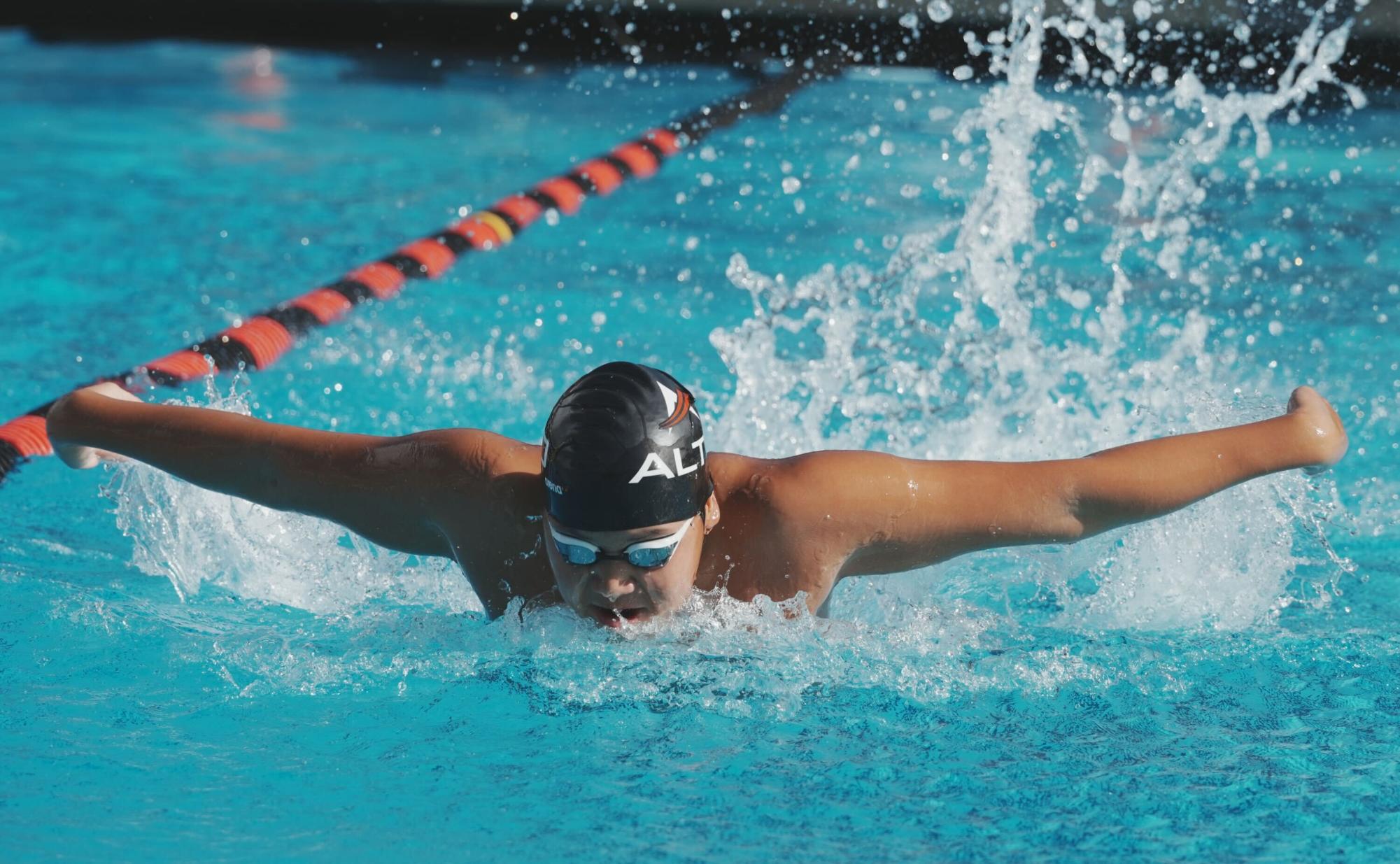

For many athletes, climbing five flights of stairs when the elevator is out of service isn’t a major challenge. However, for freshman Bryan Wang — with legs sore after an intense strength-training practice — the climb proved to be unexpectedly difficult. For three weeks and four days, Wang trained intensively under the guidance of professional swimmers in China after being connected by family friends.
He began his summer training regimen with the 2016 national Chinese swimming champion in Beijing, then traveled to Shanghai to receive coaching by a former member of the Shanghai swim team. There, his coaches helped improve his technique through critique and repetitive practice.
“(My training in) Shanghai was really similar to Beijing,” he said. “I didn’t really do anything other than just (swim laps with a focus on) my technique. I would swim a lap, (they’d say), ‘Fix this, this and this,’ and then I would swim 10 more of the same thing. If I didn’t fix it, they would make me swim 20 more.”
Before his trip, Wang had been practicing at Palo Alto’s Alto Swim Club for over two years. Despite his background in competitive swimming, he struggled to keep up with the other swimmers in the training program.
“Usually, (in America), I’m not too far ahead, but I’m definitely not below average,” he said. “I’m faster than most of my friends (in America), (but then) I go (to China) and I’m getting beaten by eight-year-olds. It’s a very humbling experience.”
However, he was impressed by the amount of dedication the Chinese swimmers had to their sport at such a young age.
“They’re very competitive,” he said. “If you say that (you’re a competitive swimmer) in China at my age, (you) would be going abroad to compete in big championships, (but) I’m over here and can’t get in the pool because it’s too cold.”
The last stint of Wang’s training was a week of strength training in Hangzhou, where his practices consisted of both swimming and exercising in the weight room.
“(My coach in Hangzhou) made me do strength training for two hours until I couldn’t walk upstairs or downstairs,” he said. “It was all really well-structured, because he also trains with Olympic teams.”
Although Wang had an overall positive experience swimming in China, he wishes that he began with a better attitude to take full advantage of the training he underwent.
“I definitely (shouldn’t have gone) in with very low expectations for myself, because with the low expectations came my mindset (of), ‘Oh, it’s okay (if I don’t do well), since I’m so bad compared to these guys,’” he said. “So I just didn’t try as hard. It took me a week and a half to actually put in my 100%. At first, I was just coasting and going along with (the training), so I completely wasted the patronage of the first coach. Go in with (higher) expectations of yourself, (but) of course, be humble.”
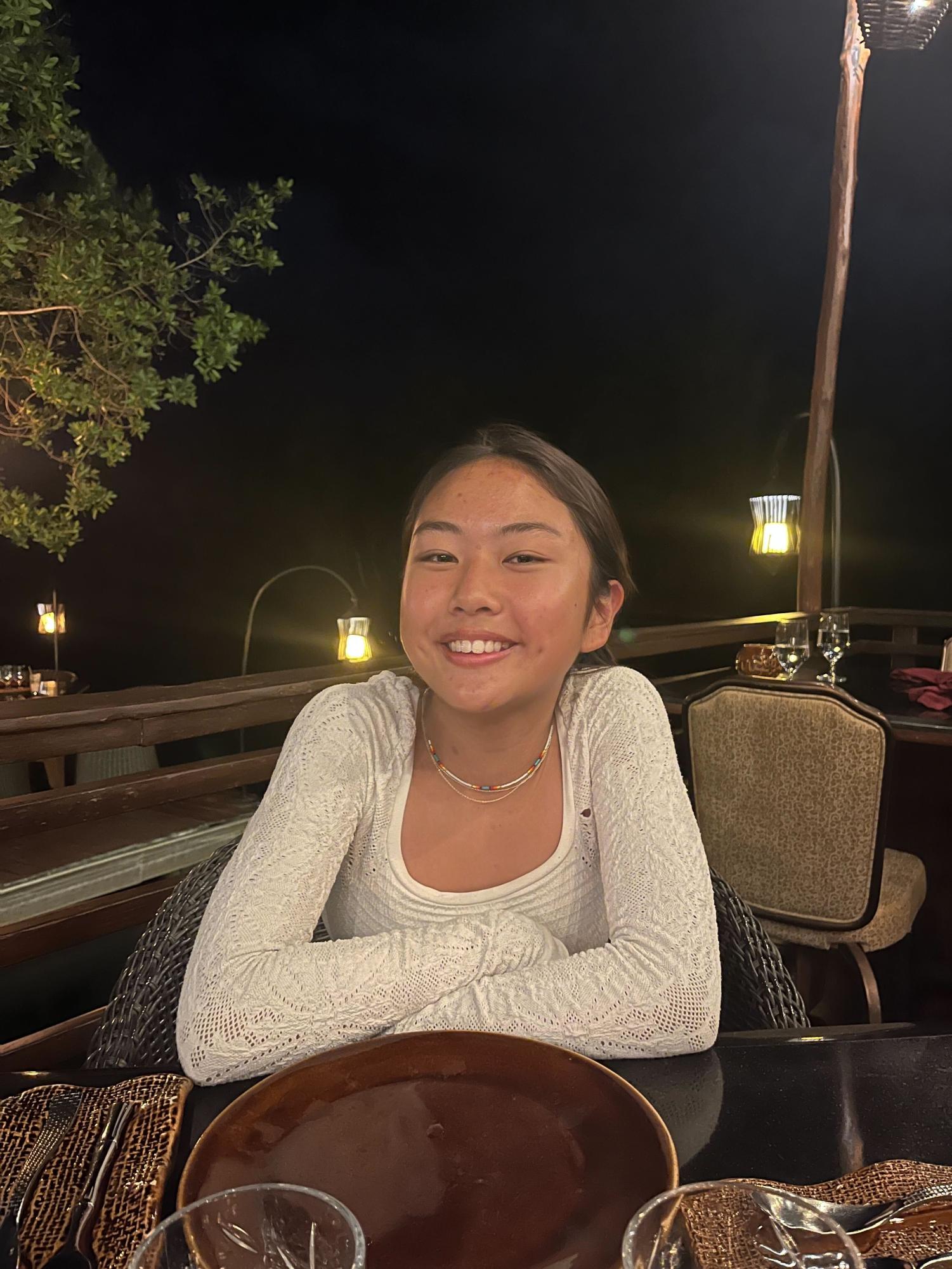

While most students spent their summer on land, sophomore Ellen Kim enjoyed her time by the water, river tubing in Oregon’s Deschutes River.
Originally, Kim tried the water sport because it was the most popular tourist attraction in Bend, Oregon, the town she stayed in.
“It’s really popular there (because) the Deschutes River is literally inside the town, so basically anyone who goes for vacation or visits there goes to the river and tubes down it,” she said.
While river tubing, Kim also experienced the local marine ecosystems and their wildlife.
“I saw things like the marshes around me and a lot, a lot of
ducks all around us,” she said. “It was pretty.”
For Kim, the excitement from navigating the rapids amplified her experience.
“It’s like a roller coaster,” she said. “I think that’s the most fun part because you get some excitement and some adrenaline.”
As a competitive swimmer, a beach enthusiast, and a recreational surfer and paddleboarder, Kim feels at home when she’s participating in aquatic activities, extending this passion to river tubing for the first time.
“River tubing relates to some of my interests because I love anything to do with water,” she said. “I grew up swimming a lot competitively, so I enjoy a lot of things to do with water. My whole family does, which is what encouraged us to try tubing for the first time.”
Kim recommends others try it as well. She notes that while there are slower moments that may seem dull, an unpredictable, thrilling part always accompanies.
“I think you can really enjoy your time and relax at the same time,” she said. “It was a super fun summer activity because it takes up some time of your day, (so) if you’re kind of bored, it’s a different type of activity (to try) since you are partly in the water.”
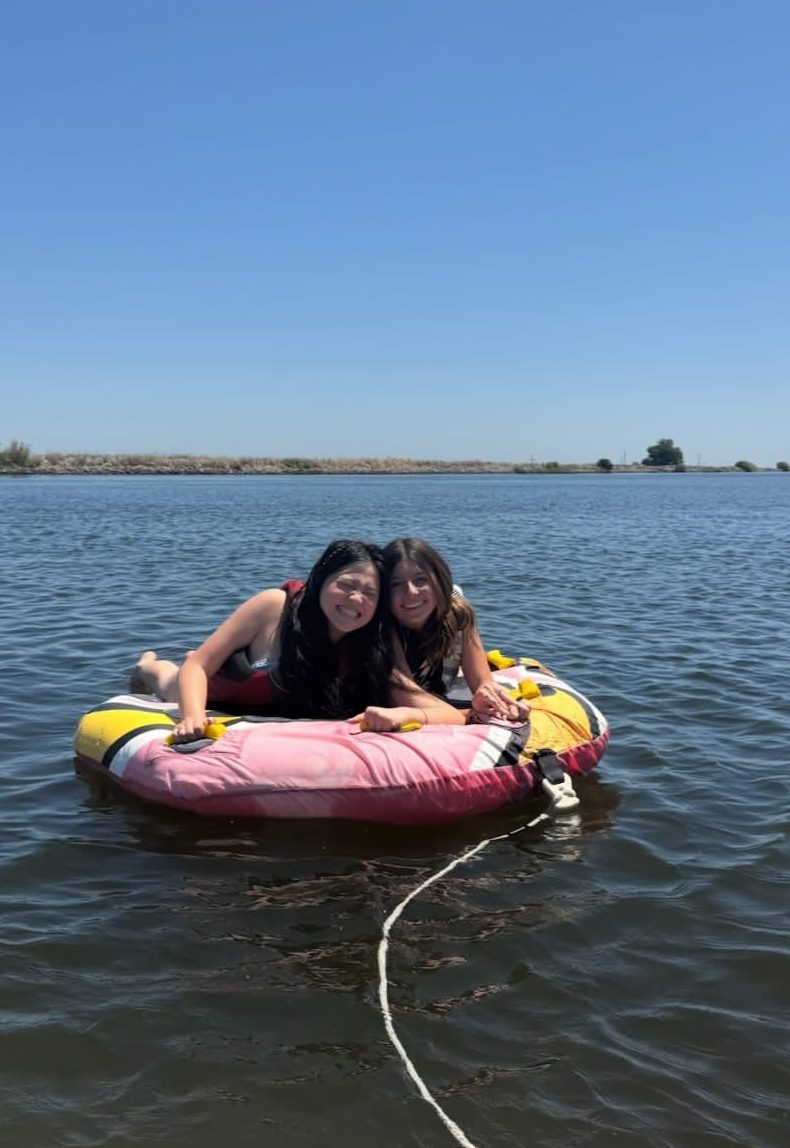

Life vest straps? Secured. Boat revving? Loud and clear. Laughter erupting? Heard from miles away. Blue skies? Shining like no other. For junior Katelyn Bibo, there is no better way to cool off in the summer than carving through the waves on her wakeboard, an annual tradition with her loved ones. Every year, her friends and family gather to spend time with each other and enjoy the summer. Bibo went to the town of Discovery Bay with her friends and family, where they wakeboarded, wakesurfed and rode jet skis: classic, well-loved activities she does every summer.
“My favorite memory was going out with my friend on the jet ski and asking random people to race us (on jet skis),” she said.
When a trip is filled with lively activities that get your heart racing, it is important to have a solid balance of fun and relaxation. The balance of a laid-back and lively atmosphere made this trip one to remember for Bibo.
“I felt very happy in the moment to be at the water with my friends and family,” she said.
Despite going to Discovery Bay every year, Bibo felt that this year’s trip was special. She was able to emphasize living in the moment and enjoy the presence of everyone who was with her.
“This trip was more memorable compared to previous years, because I was able to sit down and appreciate it more,” she said. “I was able to put my phone down and genuinely take in the moment (of being there) with everyone.”


Over the summer, pristine blue waters and dense green foliage greeted social studies teacher Ben Beresford as he returned to his family’s lakeside cabin in Moose Lake Provincial Park. Located in Manitoba, Canada, the cabin has held deep significance for Beresford since his childhood.
“It’s really cool because our cabin was built by my grandparents,” he said. “My mom started going there when she was eight or nine, and the cabin next door was built by their next-door neighbors. So, there’s a community aspect to it.”
Beresford drove with his wife and two children across the Canada–United States border, stopping in Minnesota to visit Lake Itasca and wade across the headwater of the Mississippi River, before introducing them to the cabin for the first time.
“Being able to give that experience to my wife and my kids was great,” he said. “By the second day, my daughter was like, ‘Can we come back every year?’ It was exactly what I had hoped it would be.”
The lake provided the perfect setting for a variety of activities, including fishing, swimming, canoeing, wakeboarding, and sightseeing on boat rides.
“One of my favorite things to do is just observe the wildlife,” Beresford said. “This was the first year that I’d ever seen an otter at the lake. I’ve seen beaver and foxes and bears before, but I’d never seen an otter before.”
He also participated in a family tradition of picking wild blueberries and chokecherries in the forest.
“My mom always did it growing up, and there’s a lot of oral tradition related to it since the older generations pass on all the best spots to go,” he said.
During the one-week cabin trip, Beresford appreciated the relaxed and tranquil environment, enhanced by the local community and the memories associated with the lake.
“It’s almost like a state of being,” he said. “Life just has a unique rhythm there, and there’s a flow to the day.”
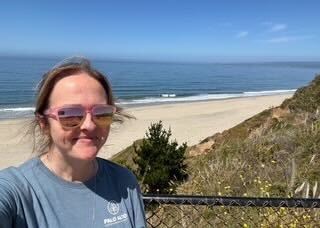

Making the most of her summer break, Secretary Janet Owen embarked on two California waterfront getaways with open arms and a peaceful mind: the coastal shores of Aptos and the clear waters of Lake Tahoe — both offering warm, sunny weather.
“I went to two lakes and a beach,” she said. “I did a lot of swimming, reading and relaxing.”
Owen first gathered with fellow students’ moms at a friend’s beach house in Aptos. During seaside walks, the group spent time sharing heartfelt conversations and life updates.
For the Fourth of July, Owen visited the beautiful scenery and vast, cool waters of Lake Tahoe, her second stop. There, she found moments to unwind through swimming, paddle boarding, reading and sunbathing.
Aside from the adventures on the water, Owen’s holiday plans to watch the fireworks at the lake took an unexpected turn.
“Out on the lake, they had a barge set up with all the fireworks that were going to be set up on the Fourth of July,” she said. “It was so windy and the waves were so big that the barge sank, so they weren’t able to set off the fireworks the next day.”
Just as the change of plans reminded Owen of how unpredictable the bodies of water can be, her trip ended up deepening her insights about swimming safety.
“Always remembering water is very powerful, never turning your back on the ocean, making sure you’re practicing good water safety and being safe is definitely what I learned from the water,” she said.
For Owen, beach and lake trips like these stir a deep, reminiscing love for the waters. Paddling across a quiet lake or turning pages under the hot sun, her summer was a reminder of the simple joys found in nature, the peace found in a swim, and the breath of a salty breeze.
“For me personally, my happy place is near the water,” she said. “Whether it is a river, lake or ocean, if I can be near the water, that’s my calming, centering place.”


Every morning this summer, senior Dilipp Stauffer followed one routine: test the pool’s chlorine levels, unfurl umbrellas, fish out drifting leaves and scrub sun-bleached tiles. Armed with plenty of sunblock and a sharp whistle, Stauffer spent the past two months as a lifeguard at the Stanford Campus Recreation Association, after serving the same role last summer at the Fremont Hills Country Club.
“It was the first job I had, so I didn’t really have expectations (and) came in with an open mind,” he said.
For Stauffer, a competitive swimmer, becoming a lifeguard was a natural move when a recruiter at FHCC announced the opportunity to his team.
“A lot of people on my swim team eventually became lifeguards, so it kind of felt like my turn,” he said.
Stauffer transitioned to working at SCRA for better pay after he reached out to one of his swim coaches, who was a supervisor of the pool grounds.
He completed American Red Cross requirements to become a certified lifeguard, which included an online course and two days of in-person instruction. Ranging from theory tests and physical skill evaluations to CPR and emergency rescue drills, these simulations strengthened Stauffer’s professionalism and vigilance — necessary skills used in real-world situations.
“I liked the spinal rescue drills (where) you put someone on a backboard, pull them out as a team, secure them and start CPR on a dummy,” he said. “It was the most fun, because it’s complex and realistic.”
That sense of teamwork carried over into Stauffer’s biggest lesson on the job: collaboration to help others.
“You’re not just working with other lifeguards,” he said. “You’re working with supervisors and even regular patrons because they can call ambulances and help in emergencies. You just have to communicate and work as a team (because) that’s how things get taken care of.”
In the near future, Stauffer hopes to pursue his lifeguarding career further and encourage others to give it a try.
“You don’t need to be a great swimmer,” he said. “You might expect everyone to be awesome at swimming, but you can be very useful as a lifeguard if you just do the training and take it seriously.”
Your donation will support the student journalists of Henry M. Gunn High School. Your contribution will allow us to purchase equipment and cover our annual website hosting costs.