Skip to Content
Categories:

Teen Mental Health First Aid trainees learn tools to support, guide peers toward professional help

Teen Mental Health First Aid trainees learn tools to support, guide peers toward professional help
Freshman Pandora Gallusser

Warning signs of mental health struggles and substance abuse do not look the same for everyone, and some often go unheard or unnoticed. For freshman Pandora Gallusser, that reality has encouraged her to listen more closely.

Initially taking the Teen Mental Health First Aid Training due to her interest in psychology and mental health, she became more aware of her surroundings, noticing shifts between peers’ mental health from middle school to high school. During the program’s scheduled PRIME sessions, she practices what to say when peers seem withdrawn, how to recognize warning signs and how to guide someone toward professional help or trusted adults.

“I would say that people might tend to assume that mental health challenges only happen to specific people,” she said. “But what we learned is how common (mental health struggles) are and how (they) could affect pretty much anyone.”

Roughly 4 in 10 teens nationwide experience loneliness or struggle with mental health, according to the Center for Disease Control and Prevention. Behind that statistic are the students navigating these challenges in their daily lives. For Gallusser, this widespread issue calls for action. Entering the class with this mindset and the basics of mental health awareness, Gallusser learned how to discuss hard and sensitive topics.

“After taking the course, I feel more confident in my ability to observe my surroundings and identify people who seem to be struggling,” she said. “After (being) given clear action steps during the program, I feel like I learned how to support people better.”

The emphasis on responsible, harm-minimizing steps stood out. Her training equipped students to dispel stereotypes and misconceptions, some of which she carried herself before the training.

“(There is a misconception), (that) talking about it increases the (likelihood for harm), but we learned that that’s not actually the case and that more open conversations can actually help more,” Gallusser said.

Although Gallusser hasn’t yet found herself in a situation where she needed to use the first aid skills directly, she still views the knowledge as something valuable to carry with her.

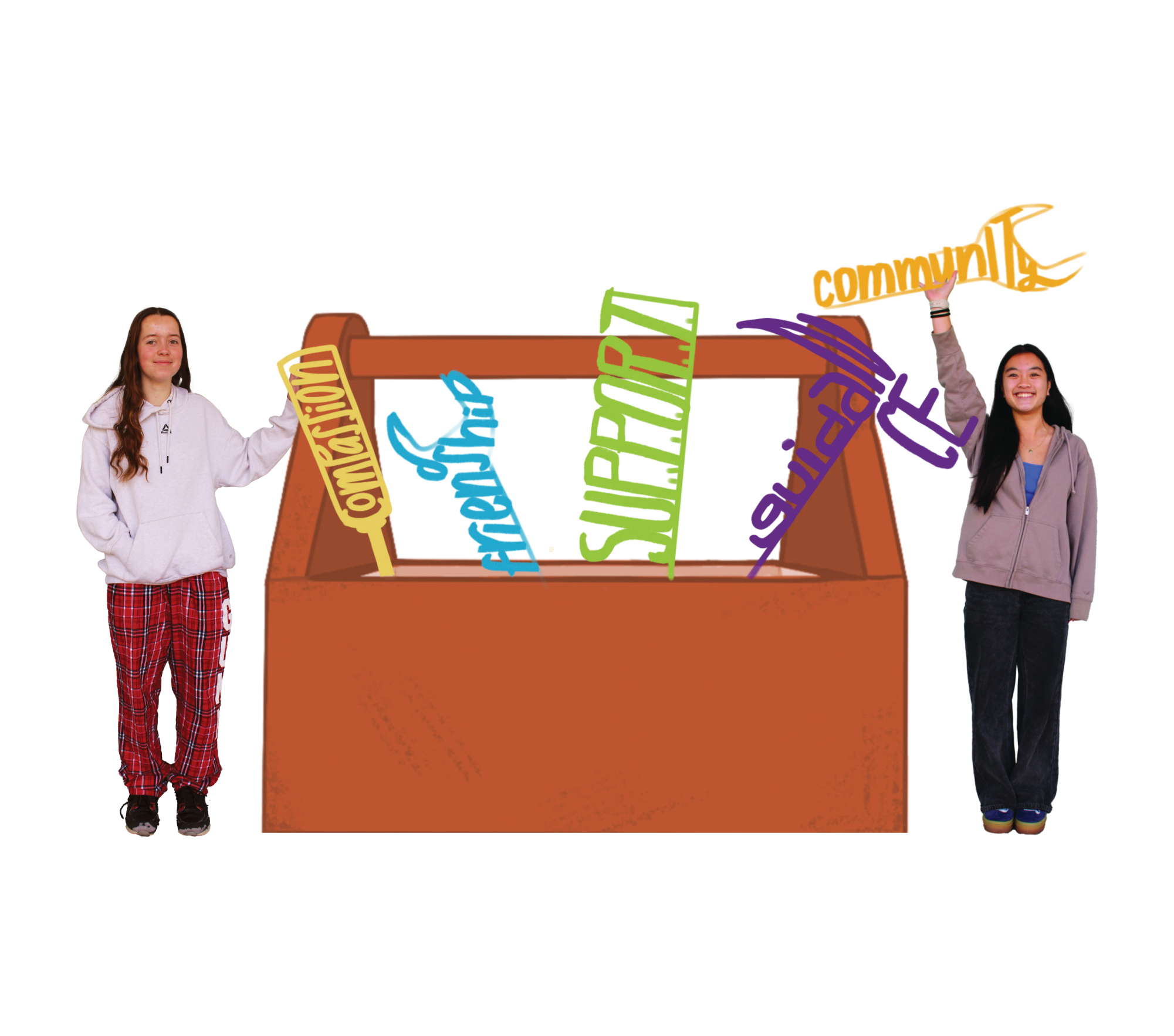
“So far I haven’t really had to use the skills I learned through the program, but I feel like, even so, it’s definitely good to know and keep as a part of your tool kit, because it can definitely come in handy, especially over the years and in many different circumstances,” she said.

Currently, the program is offered every semester during PRIME with Planned Parenthood representatives and remains optional. Gallusser says that it could have a positive impact on students as they are able to take initiative and action if others are in need of help.

“I feel (that the training is) pretty important, and it could definitely be really beneficial for a large amount of students to take so that we can all support one another,” she said. “Especially with the challenges specifically in this community and the reputations of the schools, I think (my experience) could definitely be really helpful.”

The training has shaped how she moves through her daily life — not as the eyes and ears of her school, but as a friend who knows to listen, when to reach out and when to support others.

“Some next steps I’ll take is overall becoming more aware and observant of people around me and checking in on them more, if I feel like someone ever needs help,” she said.


Eleanor Nguyen

To many, Palo Alto is a town defined by opportunity and high-achieving schools, but sophomore Eleanor Nguyen sees another side to the coin: a need for strong peer support. Behind the innovation and technology
hub that outsiders initially perceive, the discussion of mental health has been at the forefront of school board meetings and in the community. Seeing the opportunity to drive change, Nguyen enrolled in Teen Mental Health First Aid Training, a six-session program where she learned how students can support one another without taking on responsibilities meant for a professional.

“I think it’s really important (to use the skills we learned) so that you can help (others) get help, because in the program we don’t actually learn how to ‘(fix)’ our friends (or) diagnose them — we’re obviously not professionally trained,” she said. “But we are able to spot warning signs and then refer them to professional help if we think they might be struggling with something or if they open up to us.”

Inside the classroom, the instructors guided discussions after students completed their online prework, including videos and slides. The training challenged Nguyen’s perceptions of what depression and typical warning signs look like when a peer is facing mental health challenges.

“I think my understanding about mental health has changed because there are a lot more signs that you might not notice or warning signs,” she said. “I think taking this course has really helped me not just see it at surface level but more deeper.”

During the course, Nguyen learned about the misconceptions surrounding mental health — specifically, the concept that mental health is a quick fix and is similar to physical health issues.

“I think a lot of people think it might be like a disease,” she said. “But we called it ‘mental health challenges’ in the course because it’s not exactly like a sickness. If you have a cold, you can take medicine and feel better, but mental health is a lot about talking and opening up about your struggles, being able to relate to other people or just feeling some kind of validation in your own feelings.”

Nguyen felt the training was empowering and that it gave her good tools to use, though some of the discussions covered in the training were challenging to navigate.
“I think the most challenging part was talking about a lot of hard to talk about subjects like suicides, but I do think that it’s still very important to learn about, especially because they are a really big deal when someone’s life is taken away because of how they were feeling and the challenges they were facing mentally,” she said.

The training has helped raise her own awareness of mental health in her community and led her to check in more often with those around her.

“(After taking this course), I will be checking in with my friends more often and see if I see any warning signs and ask them if maybe they wanna talk to a therapist or maybe just like a counselor,” she said.

Donate to The Oracle
$100
$1000
Contributed
Our Goal

Your donation will support the student journalists of Henry M. Gunn High School. Your contribution will allow us to purchase equipment and cover our annual website hosting costs.

About the Contributors
Lena Duggan
Lena Duggan, Features Editor
Senior Lena Duggan is a features editor for The Oracle. She enjoys volunteering at a senior home, spending time with her friends and family, and thrifting.
Azuki Radhakrishnan
Azuki Radhakrishnan, Graphics Editor
Senior Azuki Radhakrishnan is the graphics editor for The Oracle. Besides drawing, she loves picnics, hanging out with friends, rewatching her comfort shows and blasting music in her headphones 24/7.
Donate to The Oracle
$100
$1000
Contributed
Our Goal