Are food transparency trends causing more harm than good?


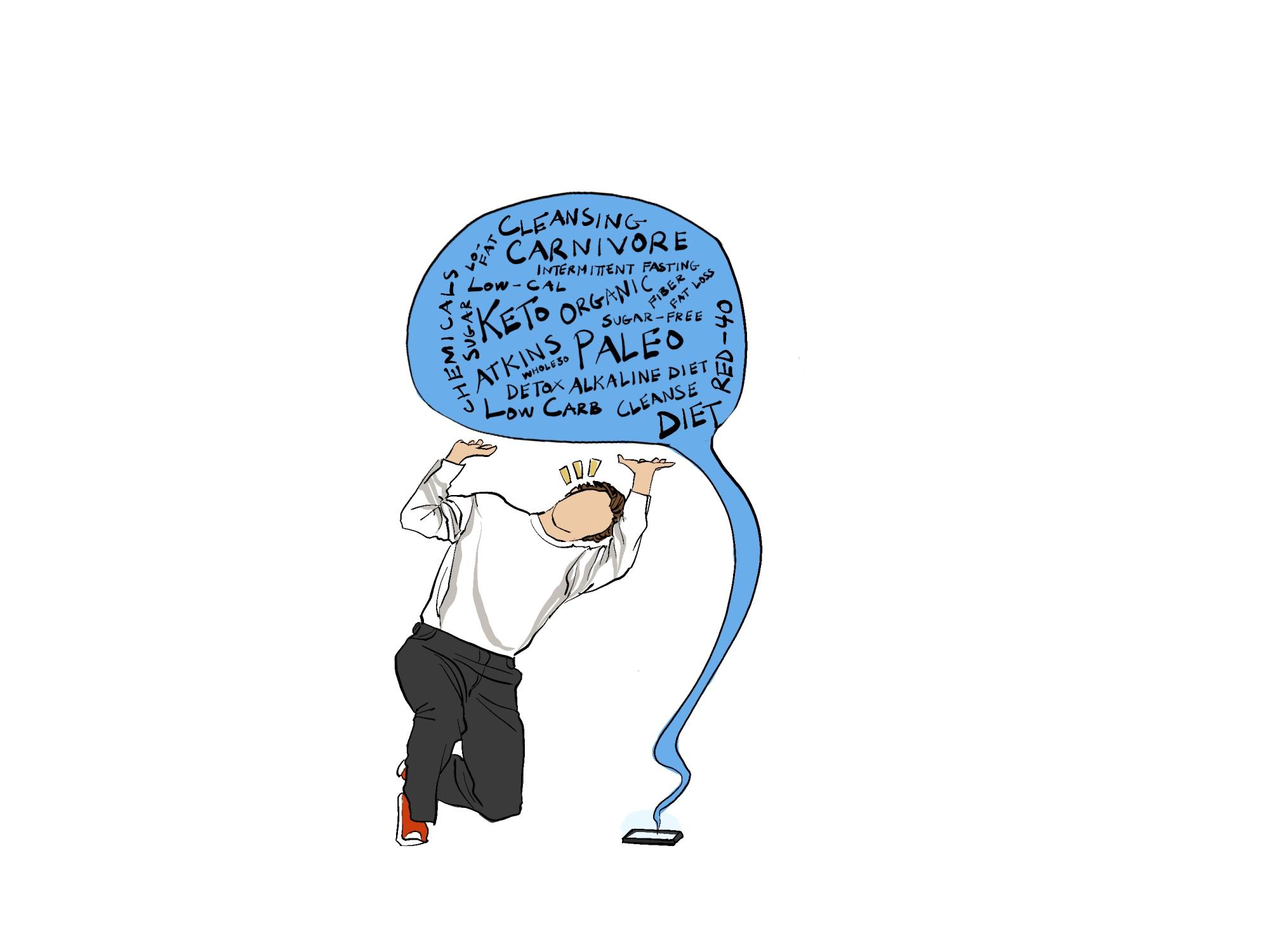
Boasting thin, contorted bodies and platefuls of salad, fitness influencers garner hundreds of thousands of likes by promoting an unrealistic, unhealthy lifestyle to an audience of impressionable teenagers. Food transparency, popularized on social media, triggers body dysmorphia, insecurity and a plethora of eating disorders through the normalization of harmful habits and mindsets.
Food transparency has directly contributed to a social media-led culture of counting calories and excessive dieting. According to the National Alliance for Eating Disorders, social media platforms help create and uphold beauty standards, with the “thin ideal” constantly being praised and perpetuated online. The “blurring of lines between the personal and public spheres on social media platforms” exposes users to the many ways people defer to these standards, making them more impactful.
Interacting with these fitness influencers, users subscribe to an Instagram-prompted culture of food transparency, and in doing so, they contribute to the glamorization of a lifestyle that revolves around arbitrary standards and that heightens their own insecurity. Influencers craft largely unattainable beauty standards, promoting hazardous diets. Users then parrot them derailing their own health. This insidious loop, fostered by social media platforms such as Instagram, Twitter and Facebook, is what sustains the debilitating toxicity of food transparency.
Additionally, the Cleveland Clinic, a prominent medical network, cites a strong correlation between social media usage and disordered eating patterns, including binge-eating, purging, anorexia and orthorexia — a pathological fixation on clean or healthy eating.
Excessive or unregulated dieting can also weaken the immune system, increasing fatigue and possibly segueing into multiple health conditions. The risk of illness outweighs any benefits that food transparency might offer. Users’ health must be prioritized over an unreliable bandwagon effect.
Critics argue that food transparency inspires individuals to develop healthier lifestyles. According to the Healthy Eating Clinic, a team of dietitians based in Australia, though, 90% of influencers’ health advice was incorrect. A study they cited found that most nutrition advice online are actually “anecdotal opinions” masquerading as fact. Impressionable teenagers are manipulated into trusting inaccurate or damaging advice, and influencers profit from widespread misinformation. To mitigate potential eating disorders, teenagers should seek advice from medical professionals, such as dietitians and family physicians, instead of buying into the misinformation on social media.
Instead of being helpful, food transparency has triggered a myriad of eating disorders. Through social media platforms such as Instagram, Twitter and Facebook, fitness influencers have promoted the dangerous extremities of health — such as unregulated dieting — and sabotaged their users’ wellbeing. A significant portion of Internet audiences consists of impressionable teenagers; it is important to maintain honest, nonjudgmental online communities for all of us to thrive in.
Social media influencers, through Instagram “what I eat in the day” reels, have increased transparency about food choices, promoting a healthier diet and lifestyle by encouraging individuals to be proud of what they eat and be aware of the food they are consuming. It is no secret that social media is incredibly influential on diets. But, the impact is positive. According to a 2025 survey conducted by the International Food Information Council, 60% of participants who came across social media content on food and nutrition said it encouraged healthier choices. When influencers share beneficial food habits they partake in, such as reducing processed foods in favor of natural snacks or desserts, it influences viewers to maintain a balance between carbs and other food groups, promoting overall health. When transparent about their meals, influencers can motivate viewers to see a healthy lifestyle as more than just discipline and abstinence. The influencers promoting daily exercise and nutritious snacks like açai bowls or protein brownies encourage a healthier mindset and encourage viewers to be more aware of the food they are consuming. By making nutritional consumption a fun and trendy aesthetic to be a part of, individuals feel that they are in a healthy journey together. Influencers can also share their past struggles with food, which can give a sense of understanding and community for viewers going through similar experiences. This honesty encourages viewers to also be transparent about their food choices and promotes the idea that food is fuel, not something to avoid. Additionally, according to a 2011 nutrition insight study conducted by Dr. Dan J. Graham, and Dr. Robert W. Jeffery, only 33% of participants self-reported that they almost always look at calorie content on Nutrition Facts labels. This low percentage affirms that social media is important because it is a source of knowledge about nutrition that reaches a broader audience. As a result, diet transparency within social media has the potential to play a prominent role in promoting healthier lifestyles. It’s important to recognize personal limitations and that everyone has different needs to properly fuel their bodies. So when social media influencers fail to be transparent with their diets, it sets high and unrealistic standards by spreading the idea that certain food choices are right for everyone. When viewing conventionally attractive body types, and only catching glimpses of them consuming unhealthy food, younger audiences may mimic their diet even if it is unsustainable or unhealthy. If the same results are not achieved, they may question their worth, and wonder if something may be inherently wrong with their bodies and lifestyle, which can lead to them developing eating disorders. This is why social media food transparency is so important — it helps viewers more accurately understand how diet and eating habits affect health and physical appearance. Transparency is the key to unlocking beneficial media that influences viewers to make healthy choices. Social media influencers posting about their healthy diets cultivates a sense of community within their platform, encourages honesty and promotes a healthier lifestyle.
Your donation will support the student journalists of Henry M. Gunn High School. Your contribution will allow us to purchase equipment and cover our annual website hosting costs.