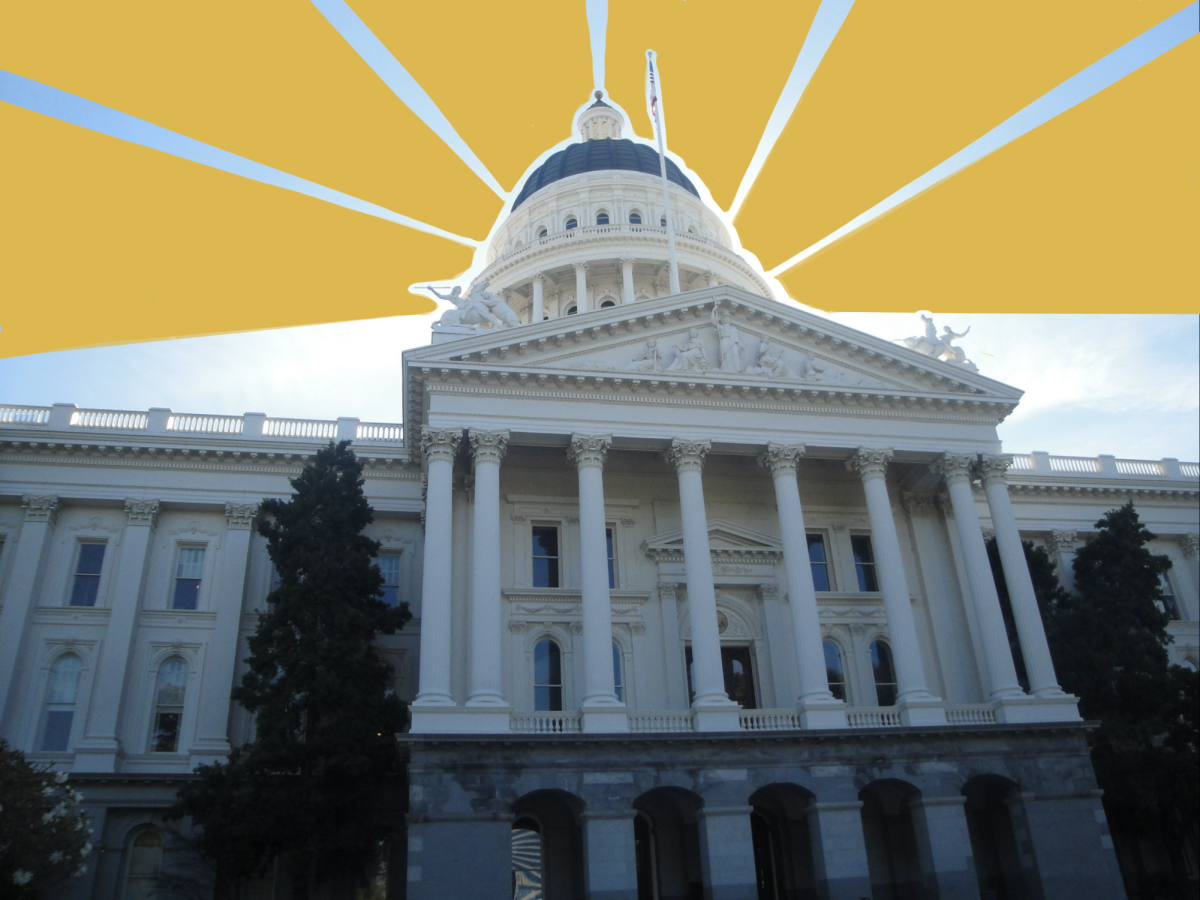
On Nov. 4, California voters will choose whether they want to temporarily suspend the state’s independent redistricting commission and adopt a new congressional map created by state Democrat leaders. The proposal aims to replace California’s independent commission-made congressional map. The measure comes in response to Republican-led redistricting in other states such as Texas, where five Democratic House of Representatives seats could become Republican.
Since 2010, California has used the independent California Citizens Redistricting Commission to draw congressional maps in an effort to stop partisan gerrymandering, which refers to manipulating an electoral district’s boundaries to favor a certain party or class. The commission is made up of Democrats, Republicans and independent voters selected through a screening process to ensure that politicians do not draw their own districts to give themselves an advantage.
The proposal — led by California Governor Gavin Newsom — would create a Democrat-favored map to counter Texas’ redistricting efforts until the duty of congressional map drawing reverts back to the independent California Citizens Redistricting Commission in 2030.
Republican House leaders, such as members of the National Republican Congressional Committee, have
denounced the California redistricting effort as a “power grab” to get Newsom closer to the White House. Newsom and his fellow Democrats defend the measure as a way to protect representation of Democrats in the House, declaring at a Los Angeles press conference that California will not be pushed around by the federal government.
Stanford Ph.D. candidate in political science Jennifer Wu wrote in an email that redistricting may cause politicians to rely on their party affiliation to attract new voters, and could also ensure equitable representation under the “one person, one vote” guideline by accounting for population shifts over time. She added, however, that redistricting can also create burdens for communities, as those who live in redistricted areas tend to have lower participation rates, meaning less of the community is represented.
“People have to figure out how to feel towards the incumbents of the new district, and also the candidates they are running against,” she wrote. “This affects already disadvantaged populations most, such as black communities. It is important to think of how we can lessen the information burden on those who are redistricted to make sure political participation does not fall.”
At least once per decade, California commission maps are redrawn, with the most recent update occurring in 2021 and the next upcoming 2030. Palo Alto Mayor Ed Lauing, via email, believes that it will have little impact on his district.
“I do not think our district will be affected. This is a safe Democratic seat,” he wrote. “There will be multiple primary candidates, but the nominated Democrat will win in the fall. I think it will increase (voter) turnout in the state for sure, but for our district, maybe only marginally. I’ve spoken directly with Representative (Sam) Liccardo, and he does not anticipate changes here.”
For junior Rania Bhalla, the ballot measure is important because the political efforts in California will reshape the way people are engaged and informed in their own districts. Since joining Model United Nations, Bhalla took an immense interest in political relations, following redistricting stories heavily.
“Redistricting really affects young people just because they have to fill out information (and) need to know if the district that they live in has changed,” she said. “I think it’s very important that we know that, because that is something that you may have to put on an application or form, it’s important to know what’s going on in your home state, and (how) it’s directly affecting you.”