As the California primary election approaches on June 2, polling projections have undergone various shifts in light of recent disclosures of candidate behavior. Campaigns reflect political nationalization and have incentivized youth civic engagement.
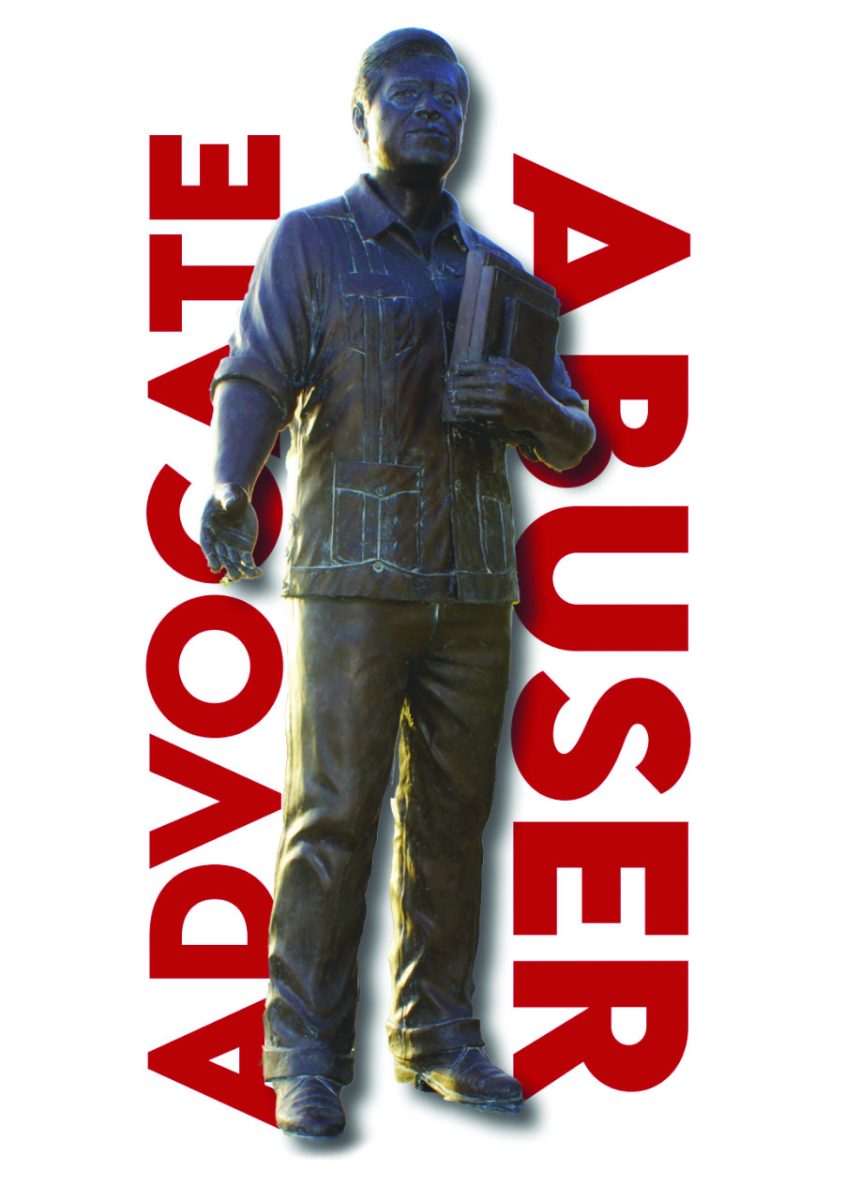
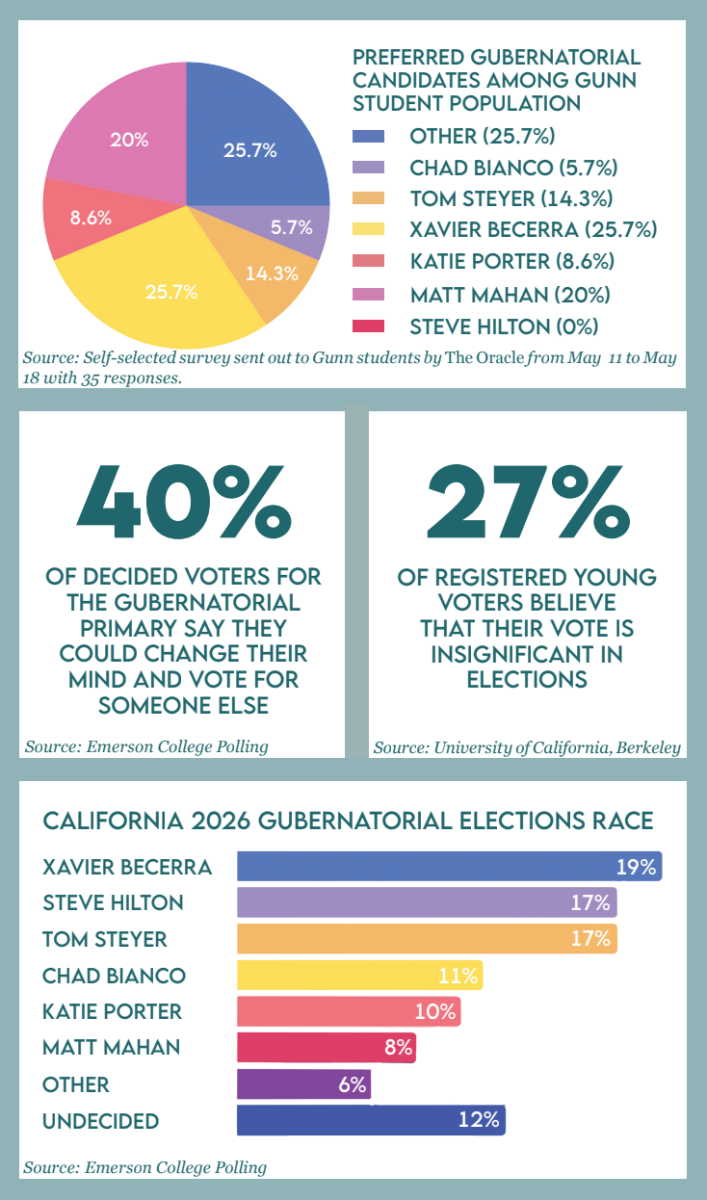
Following the withdrawal of former leading candidate Democrat Eric Swalwell, who faces multiple allegations of sexual misconduct, other candidates have gained his votes, allowing new leaders to emerge. As of May 10, Democrat Xavier Becerra has moved ahead, with Republican Steve Hilton and Democrat Tom Steyer tied behind him, per Emerson College Polling.
California’s top-two primary system establishes that, unlike federal elections, all candidates are in the same primary race, and its open voting process allows voters to vote without being registered with a political party. Regardless of political party, the two candidates with the most votes will advance to the general election, potentially overturning a longstanding pattern of two Democratic candidates
ending up on the final ballot.
According to Stanford political science doctoral candidate Brian Wu, these projected voter trends demonstrate a broader trend of increasing polarization across the U.S., and with that pattern, a shift in voters’ priority from platform policies to party identity.
“A lot of people have started to ignore candidate characteristics or candidate qualifications when they’re choosing who to vote for,” Wu said. “Most people focus on just partisanship. So, even with allegations of sexual misconduct, or even criminal allegations, a lot of people have either become numb to these things, or they no longer have the same amount of care about (them).”
This exacerbated polarization has given rise to campaigns that involve political nationalization, a practice where national issues are discussed at a statewide or local level. Wu says this has become increasingly prevalent in recent years.
“(Local and state elections) used to be much less polarized and much less partisan,” he said. “(Now,) you’re seeing mayors talking about Trump, immigration (and) taxation, when really, they have nothing to do with that. But it’s because they know that party and partisanship have become such contentious issues, and people have become so attached to these identities that saying these things actually gets them a vote.”
Social studies teacher Benjamin Beresford views this increased adherence to partisan identity as a divisive force that has extended beyond political conversation, overshadowing daily interactions as well.
“Political affiliation (has) become so wed to people’s identities,” Beresford said. “The stakes of it are perceived to be so high that our ability to see humanity in other people really runs a risk of disappearing.”
Wu also has concerns about the excessive platforming of addressing national issues as part of local and statewide campaigns. But freshman Aspen Gonzalez Sonderhoff, who manages social media for the Civic Engagement and Education Project club, believes this trend of political nationalization is a positive, necessary change that has pushed politicians to advocate for programs aligned with voters’ interests. She holds that local or state roles, such as the governor, partially exist to serve as a check on federal power.
“We should push back on some (federal programs) like ICE,” Gonzalez Sonderhoff said. “A lot of the people that ICE is deporting (are being deported) inhumanely, and I think the governor should fight back on that because it does happen in California.”
Social media, Wu said, has contributed significantly to nationalizing local candidates’ campaigns as well.
“In the past, the way you advertised a campaign — newspapers, radio, television — cost a lot of money, but social media is relatively free,” Wu said. “(Candidates can now) take a bigger stance and become more of a nationalized image, because (social media) allows them to reach out to more people.”
Beresford notes that though a candidate may be a proponent of uncontroversial policies, their popularity and established public image still hold more influence over voters.
“Social media has made (elections) even more about media and popularity,” Beresford said. “It’s more like public relations, so successful candidates are ones who have effective media campaigns.”
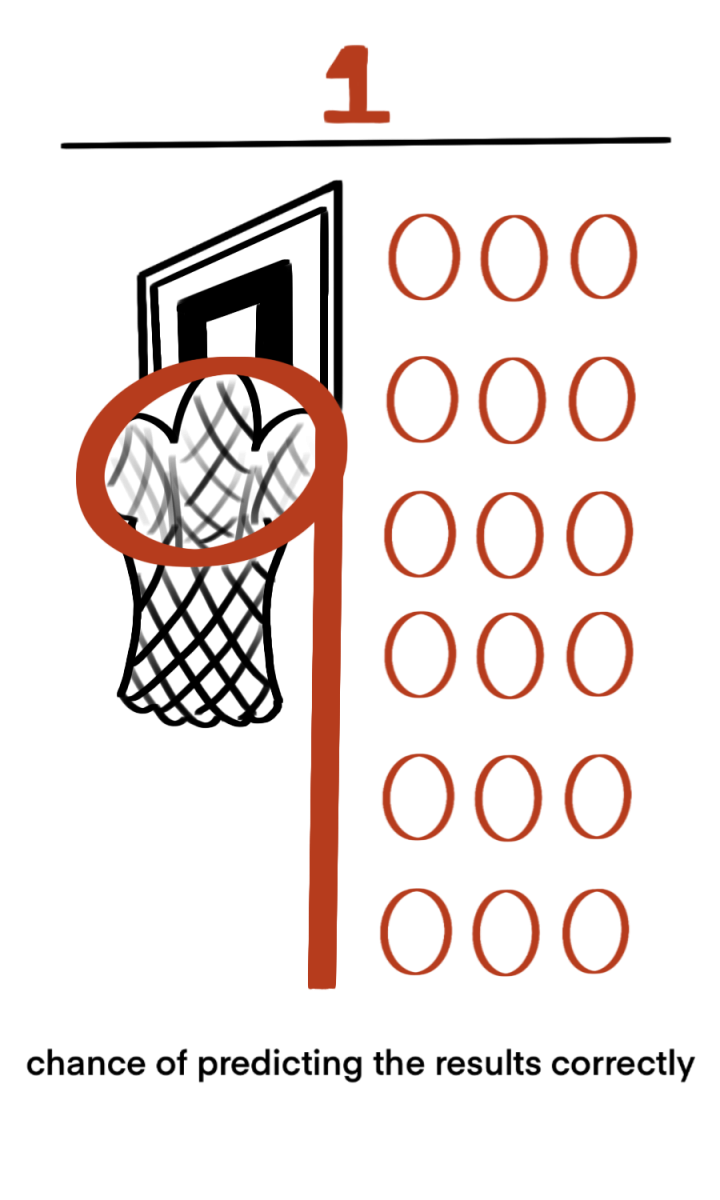
Though they are the heaviest social media users, young voters remain one of the lowest turnout blocks, Wu said. The Institute of Governmental Studies at the University of California, Berkeley, explains this pattern, reporting that 47% of registered young voters feel young voters’ lack of education will result in a low turnout in the June primary, 33% feel pressure from special interest groups, 31% don’t have time and 27% believe their vote is insignificant.
Gonzalez Sonderhoff has noticed this pattern of scarce civic engagement among her peers, most of whom cannot vote right now but will likely maintain such a level of political apathy even when they become legally eligible. While she recognizes the limitations of the school curriculum’s ability to incorporate modern politics, she stresses the criticality of being educated on these matters to push back against low voter turnout.
“It’s important that we know what’s happening in our government,” Gonzalez Sonderhoff said. “The teachers at school do what they can, but also they are meant to be neutral, so they can’t talk about current (events) that much. You need to be able to learn (somehow) so that you’re making informed votes.”
Beresford echoes these sentiments, pointing out that there are civic activities beyond voting that are still effective.
“Even if you’re not old enough to vote yet, there are lots of things that you can do in your community, whether that’s getting involved with an organization or knocking on doors,” Beresford said.
As part of his U.S. Government class, Beresford guides students in completing civic action projects to increase their active engagement with the community and demonstrate their ability to make an impact, despite their age group’s legal limitations. Some of these projects, he notes, have received unexpected responses from city officials and opened up opportunities for meaningful conversation.
Beresford nevertheless stresses that young people who have the power to vote should exercise that privilege and responsibly educate themselves before doing so. Withdrawing from political engagement under the assumption of being powerless, he says, is a missed opportunity to shape the future they will live in.
“The irony of lower levels of political participation among youth is that they’re the ones who have the most to gain or lose from the changes that happen, because it’s very likely they are going to outlive other voting populations,” he said. “They have more at stake, and their voice matters. Voting is one of the great levelers.”