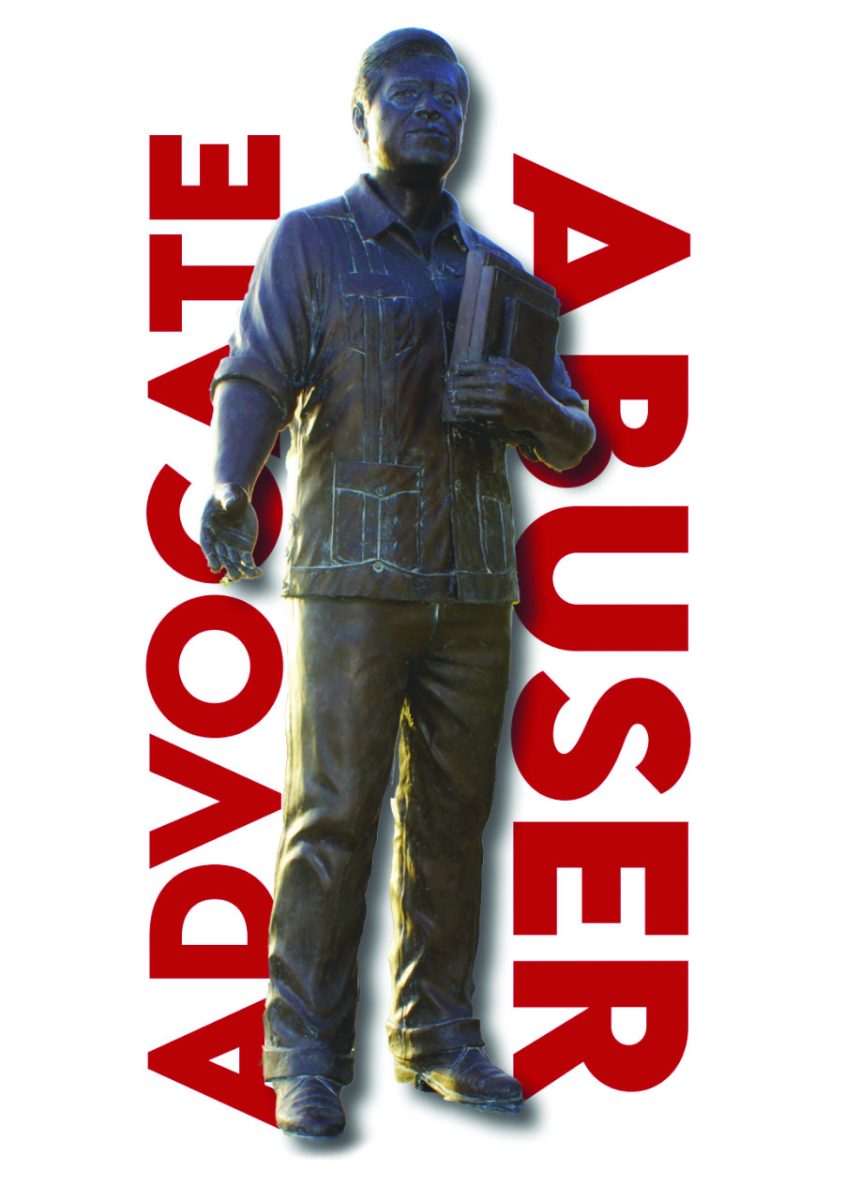
For years, Latinos Unidos member junior Keylee Villanueva Dominguez saw Cesar Chavez as a symbol of justice — his name tied to lessons on activism, classrooms and stories of social change. Now, that image feels more complicated. As cities scrub the name “Cesar Chavez” from public surfaces following newly unearthed evidence that the labor leader had sexually abused women and children, community members grapple with how these allegations complicate his legacy as a keystone of social justice education and as a source of inspiration for young activists.
This new information has stirred clashing emotions among Gunn students, many of whom had looked up to Chavez as an inspirational idol. According to Dominguez, navigating these complicated sentiments is best done by separating Chavez as an individual from the impact of the cause he advocated for. She cautions that heavily associating movements with just one person unfairly discredits the thousands of other people who stood up for the same cause.
“It’s possible to acknowledge (Chavez’s) wrongdoing while still recognizing the importance of the labor movement that he (was involved) in,” she said. “We should know that this does not excuse his behavior (while) also recognizing that the movements are bigger than just one person.”
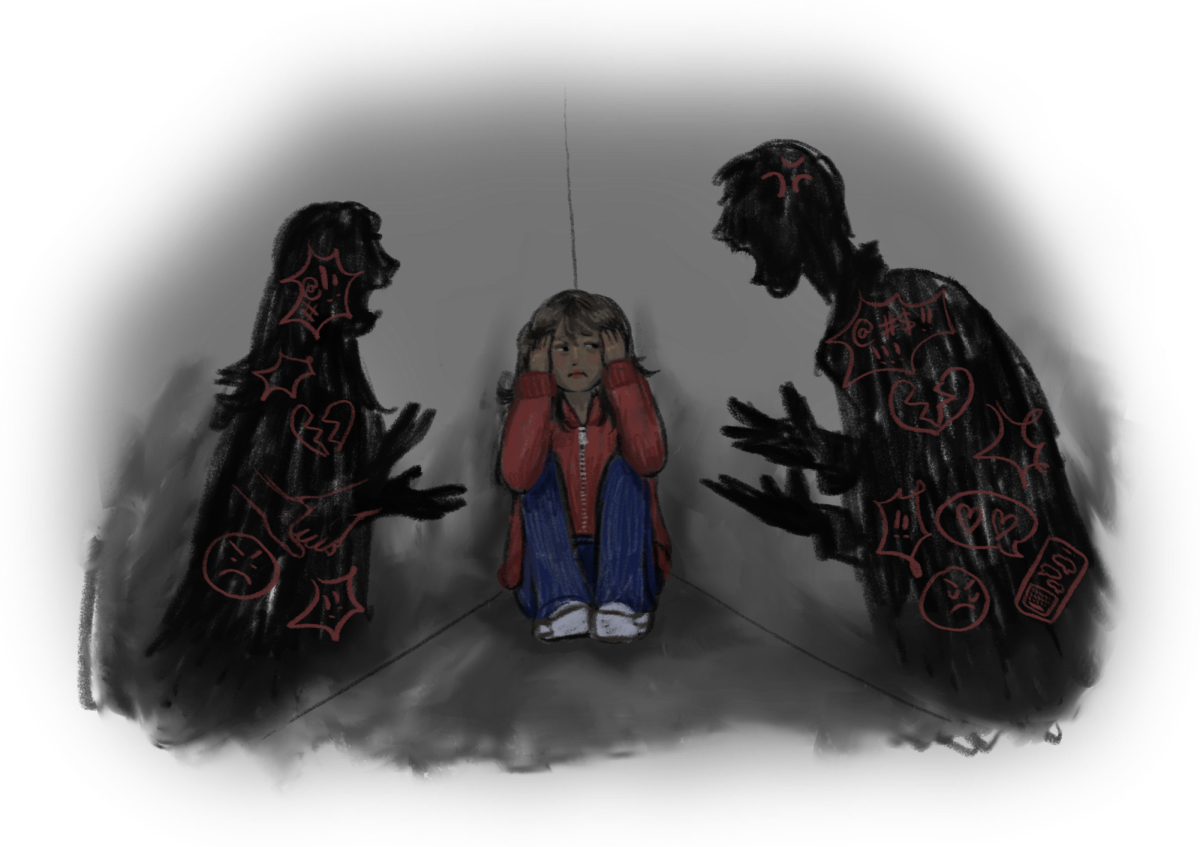
The New York Times revealed in an investigation published on March 18 that Chavez had raped Dolores Huerta, an activist who had co-founded the United Farm Workers union. He had also sexually abused two young girls: Ana Murguía and Debra Rojas, both of whom were deeply connected to the UFW through their parents’ organizing work with Chavez. According to the investigation’s findings, these were not one-off incidents, but rather pieces of a consistent pattern of sexual abuse demonstrated by Chavez, one that has remained out of the limelight for many years.
She and many of the other victims had felt pressured into decades of silence by shame, fear and the weight of Chavez’s widely revered image. Per The New York Times, Huerta had refrained from speaking up about being raped until now, afraid that no one would believe her.
Substantiated by extensive evidence, these allegations have evoked conflicting feelings around Chavez’s legacy. In Fresno, San Fernando and many other cities across the nation, vacant spaces now occupy where statues of him once stood. He has long been venerated for his work in both politically empowering Latino voices and securing better pay, living conditions and health care for American farmworkers. But with these stains on his moral character having come to light, educators and activists alike now face a pressing question: How does one navigate the nuances of Chavez’s impact?
For social studies teacher Jeff Patrick, who has helped shape the new ninth-grade Ethnic Studies curriculum, the revelations of this investigation are a reminder to reiterate to students the importance of focusing on the impact of movements as a whole instead of placing one particular leader on a pedestal.
“(We need to) emphasize that these movements are never the product of just a single person,” he said. “It helps people understand the story (because) we like to identify with characters, but in order for these movements to be successful, they need a group of dedicated workers.”
Educators must now decide whether or not to modify their social studies curricula and how to frame this new narrative. Patrick says that in light of these allegations, how Chavez’s story is taught will be a key point of consideration when revising the Ethnic Studies course plan this summer.
Retired Milpitas city council member Bob Nuñez, who also formerly served as superintendent of East Side Union High School District in San Jose, believes it is incumbent upon every school district to thoroughly discuss this dilemma and to give weight to student input in the process.
“(Students are) the customers,” he said. “(They’re) the ones who are partaking in this educational plan, (and) should be involved in the creation of the curriculum (not just) on this issue, but on all issues. As a high school student, (you) need to be engaged because this will come up again.”
Having met with and been deeply inspired by Chavez, Nuñez finds this news of the activist’s sexual misconduct especially startling and difficult to come to terms with. Chavez had influenced some of the major life choices that have led Nuñez to where he is today.
“A lot of what happened that day (when I spoke with him) shaped my career all the way until I retired,” he said. “Staying in education was a conversation with him. Helping Latino families that were farm workers was because of my conversation with him.”
Nuñez warns of how being overly concerned with just one individual’s impact detracts from the efforts of everyone else involved and from the cause itself.
“You lose sight of the issue, and you concentrate on a person,” he said. “But nobody has ever done anything all by themselves.”