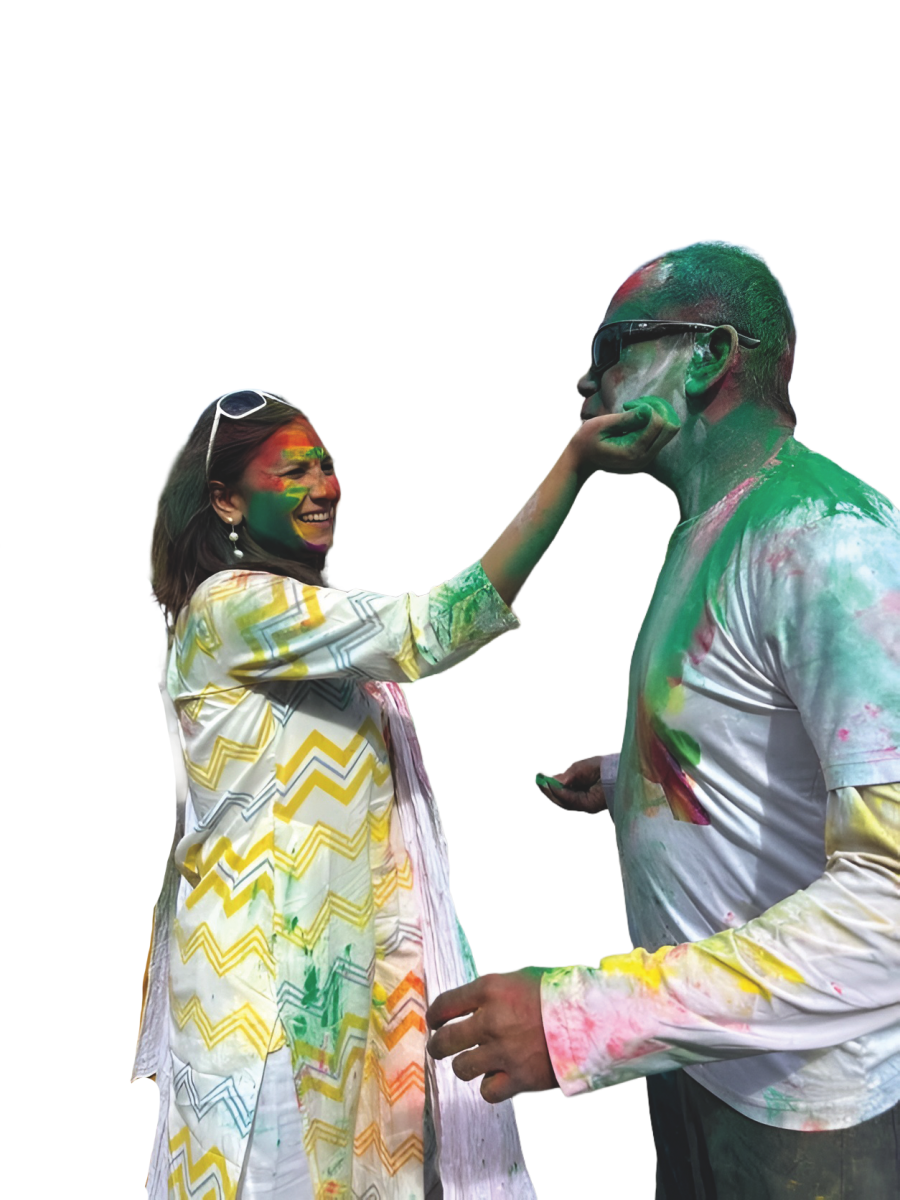
Many have seen the images of bright, multi-hued powder staining white clothing, but they may not know the significance behind it. It is the celebration of Holi, a Hindu holiday also known as the “Festival of Colors.”
Holi is primarily recognized as the arrival of spring and the triumph of good over evil, but it is rooted deeper in the eternal love of ancient Hindu deities Radha and Krishna. The legend says that Krishna, being jealous of the tone of Radha’s skin, applied color to his face to change it. Over time, this legend evolved into the use of the powders seen in many Holi festivals. The powders, called Gulal, were originally made from natural substances — berries, turmeric, flowers and other plants ground up to create color. Today, most of the powders thrown at people during celebrations are made of chemicals.
Celebrated over two days, Holi is synchronized with the lunar calendar, causing its dates to vary. This year, Holi begins on the evening of March 3. Sophomore Nia Sharma’s family celebrates Holi by attending a social media-planned event with Bay Area community members to throw powder and share meals.
“Everyone brings food, and food is a really big thing in India — it’s how you show your love,” she said. “It’s just a really big community bonding kind of thing.”
However, Holi is more than just the opportunity to welcome spring and have fun: It is a chance to reconnect with her Indian heritage alongside others who celebrate and respect the culture.
“It kind of feels like you’re pulling the whole Indian community together to celebrate this really happy event,” Sharma said. “I really love Holi because a lot of other Indian holidays are (typically celebrated by family), or more like even (by close friends). I love how (Holi) is really just everyone in the community.”
In an effort to avoid prejudice on the basis of being “too Indian,” Sharma’s parents didn’t raise her to celebrate many Indian holidays — only Diwali and Holi. While it may have prevented bullying, it also led to Sharma feeling disconnected with her culture.
“I definitely wish I knew more about my heritage,” she said. “I wish I grew up celebrating more events and knowing more about my culture in general, but I’m really glad that I do get to celebrate Holi and Diwali because those are two of the biggest holidays in India.”
Senior Tilak Thiyagarajan enjoyed Holi the most as a child, but the event remains an enjoyable festivity growing up.
“It’s tradition — you’ve done it for a while, and for kids it’s just fun because you get to throw color,” he said. “Even the parents will run around and put color on the kids. I think everyone’s transported back to childhood.”
Diversity Commissioner senior Elijah Williams helped plan Gunn’s annual Holi event, an effort to bring awareness to Hinduism and cultural holidays celebrated by members of the Gunn community. “The point of it is to bring people and families who celebrate that culture to feel welcomed at Gunn,” he said. “Sometimes those cultures aren’t necessarily fully represented at Gunn, so events like these are really helpful for getting people to feel more welcomed (on campus).”
Much of the importance of the event comes from the inclusion of every person, regardless of whether or not they typically participate in Holi.
“Even if people who are working on the event or somebody who comes to the event doesn’t necessarily celebrate the holiday, having that welcomeness to it shares a knowledge of the culture,” he said. “It’s a further step into inclusivity at Gunn.”