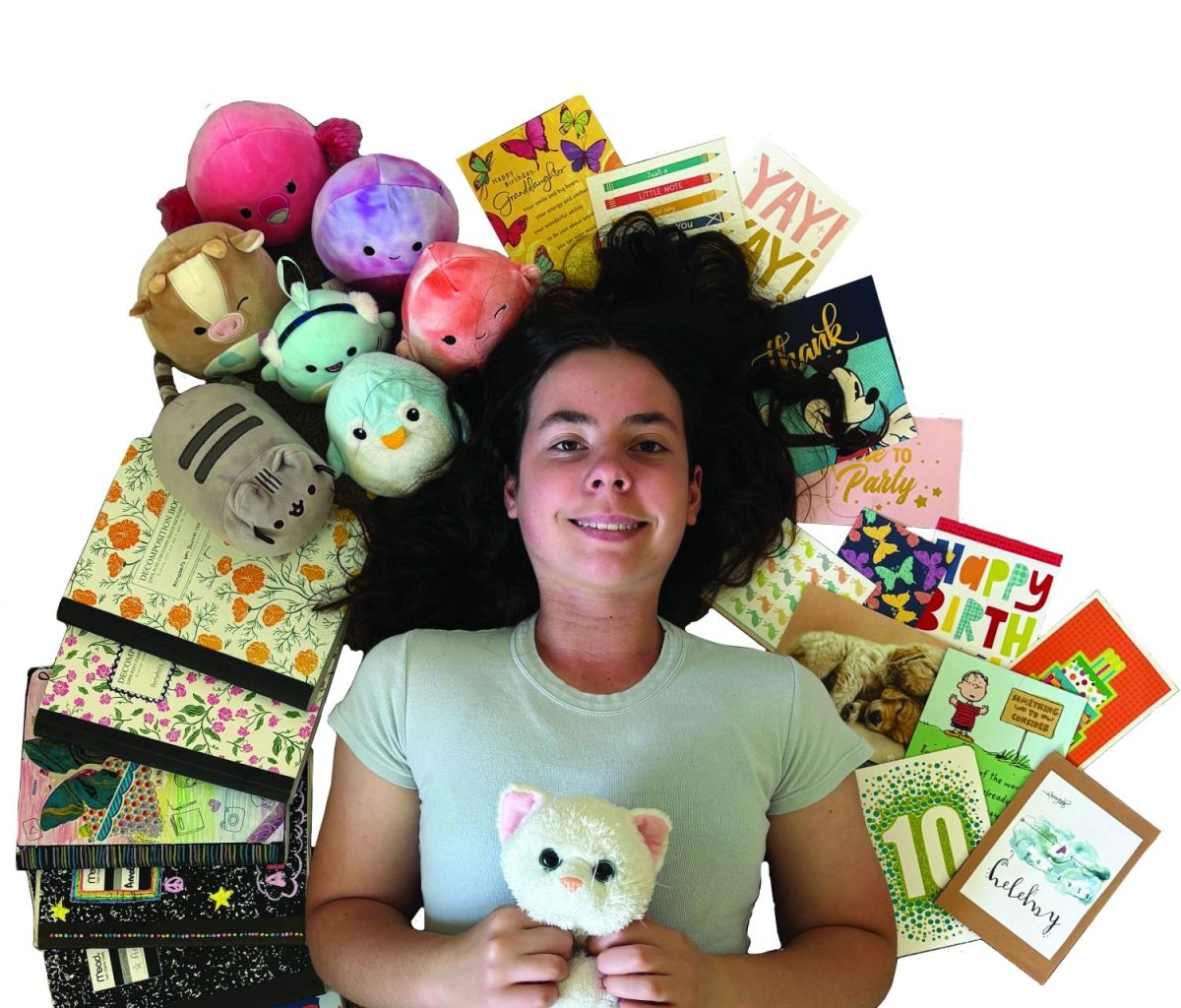
Collecting is an activity humans have been doing since the beginning of our existence. Before currency, certain items were an indication of power and were cherished as opposed to being thrown away. Fast-forward to today, the trending hashtags #Minimalism and #DeclutterYourLife seem to challenge the hobby we have stuck to for so long, pressuring viewers to only keep the “essentials.” Although collecting is now seen as a disorganized lifestyle, keeping items evokes nostalgia and fosters a sense of community through trading culture and establishing authentic connections, both of which act as mood boosters.
According to Dr. Jennifer Brown from Cottonwood Psychology, a team of professional psychologists, identity is formed through memories, and photos act as cues to initiate them. Keeping objects brings humans joy and serves as a physical reminder of various memories. For example, mementos remind collectors of personal experiences and defining moments.
People who find joy in keeping things are also more open to new experiences, per a 2025 study conducted at the University of California, Berkeley, by assistant professors Ellen Evers and William Ryan. While many people may consider collecting a passive hobby, the study finds that it actually shows curiosity and willingness to explore new activities that may not have been considered before. Most collectors keep things for to preserve experiences even though the stereotype links the hobby to materialism and physical accumulation instead of sentimental value.
Communities often form around finding a common interest, and this is reflected in collecting culture. These groups are incredibly popular, as demonstrated in highly regarded franchises like “Pokémon.” The iconic video game and trading card empire is currently the biggest media franchise on the planet, according to The British Times, with 489 million game units sold in 90 countries. Its popularity didn’t surface out of nowhere: People began hopping on to the trend, and many began to love searching for rare cards and trading with their fellow card connoisseurs.
Building a sense of belonging across diverse groups of people to find a common interest is extremely beneficial, and participating in collecting-oriented groups can also mitigate loneliness, a significant risk factor for depression, as stated by Psychology Today. Having the opportunity to experience authentic human bonds adds to one’s identity.
Collecting, however, does not imply keeping all of one’s possessions — there are always strategies to cherish belongings while also remaining tidy. The minimalism movement’s original intent was to eliminate meaningless “junk” while still keeping memorabilia. Still, it has snowballed into extremes, as people have begun to throw away items holding personal significance to achieve the “clean” look. Marie Kondo, a pioneer of the organizing empire who rose to popularity from her cleaning methods, always said to “take each item in one’s hand and ask: ‘Does this spark joy?’” Kondo, known for her book “The Life-Changing Magic of Tidying Up,” does not instruct us to get rid of our cherished belongings but to hold on to the ones we value most and care for them. While it is beneficial to occasionally take a peek into the disorderly nooks and crannies of our living spaces and tidy up here and there, we must remember that the things we choose to keep reflect our memories and who we are.