Following the surge of social media platforms in the early 2000s, the internet popularized memes. British evolutionary biologist Richard Hawkins coined the phrase, meme, in his 1976 book, “The Selfish Gene.” In it, memes refer to units of cultural transmission, a contemporary equivalent to genes. Today, memeification, or the act of turning people, events or concepts into memes, desensitizes users to topics — such as politics, war and perspectives on controversial issues — that are frequently circulated in the media and among online communities.
Initially, memes featured simple, digestible graphics that could be copy-pasted into a myriad of contexts; they were either hand-drawn illustrations or photographs that included a space for user-inputted text, and online audiences appreciated this accessibility. Examples of rudimentary memes include the Rickroll, a still-popular prank that involves catfishing others into watching Rick Astley’s music video; cat photos and videos; Trollface, a grinning avatar; and the Success kid, who bears a determined frown and a rebelliously balled hand. Modern-day meme culture has shifted away from the innocuous nature of these early internet memes, veering toward propaganda and hate.
Empathy, often lost or diluted in meme culture, is the keystone of human interaction. Without it, people struggle to understand one another, resorting to heated, surface-level disputes. According to a 2023 study conducted by the University of Indiana, participants — regardless of age, gender or education — reported decreased levels of empathy as their social media usage increased. Meme culture builds upon users’ preexisting defense mechanisms, and it encourages them to laugh at uncomfortable affairs. Accordingly, people repackage tragedies into humorous, bite-sized content, eliminating others’ responsibilities to understand and process the political landscape. For example, footage of the Israel-Palestine conflict is often tagged as #WorldWarIII. Although this hashtag doesn’t explicitly promote harm, it sensationalizes a millenia-old conflict.
Generally, memes are composed on the fly, and the fast-paced nature of regurgitating templates fosters a breeding ground for misinformation. According to a 2025 Reuters study, platforms such as Facebook, X and YouTube have overtaken TV and designated news apps as the primary source of media for the majority of U.S. citizens. This suggests that people mainly rely on memes for information — information that does not go through verification.
Additionally, memes are weaponized by political organizations to further their agendas, desensitizing users to political violence. On X, the Trump administration often satirizes, mocks and downplays anti-MAGA entities, creating parodies and caricatures. In a March 18, 2025 post on the Trump administration’s account, Virginia Basora-Gonzalez, an immigrant arrested by U.S. Immigration and Customs Enforcement, sobs freely as an officer handcuffs her. The illustration is generated by artificial intelligence, and her tears are unnecessarily exaggerated to offset the officer’s stoicism. The ready belittlement of Democrats discourages empathy, as Republicans embrace their own perspective while ridiculing the antithesis.
Memes also lend a platform to racist and antisemitic content. Pepe the Frog, originating in 2005, has been leveraged as neo-Nazi and far-right propaganda. It was added to the Anti-Defamation League’s database in 2016, demonstrating that humor never outweighs respect and decency. The boundary between good-natured banter and discriminatory jokes lacks definition, and meme culture, through unabashed satirization, reduces this distinction further.
Finally, memeification creates the illusion of political engagement without requiring meaningful action. When citizens satirize distressing content, such as school shootings and police brutality, they become desensitized to it. Compounding this inaction, social media users tend to succumb to instant gratification. In a 2014 study published by Bucknell University, researchers found that “the need for round-the-clock connection not only makes people more impatient, but it also robs them of time for quiet reflection or deeper, more critical thinking.” Consequently, people are encouraged to accept the status quo instead of lobbying to improve it. In a 2015 study conducted by the Journal of Social and Political Psychology, users considered memes to be “a tool for enhancing protest and provoking social change.” Reposting memes may feel like participation, but it often substitutes tangible involvement, such as in-person protesting, for slacktivism, or online activism.
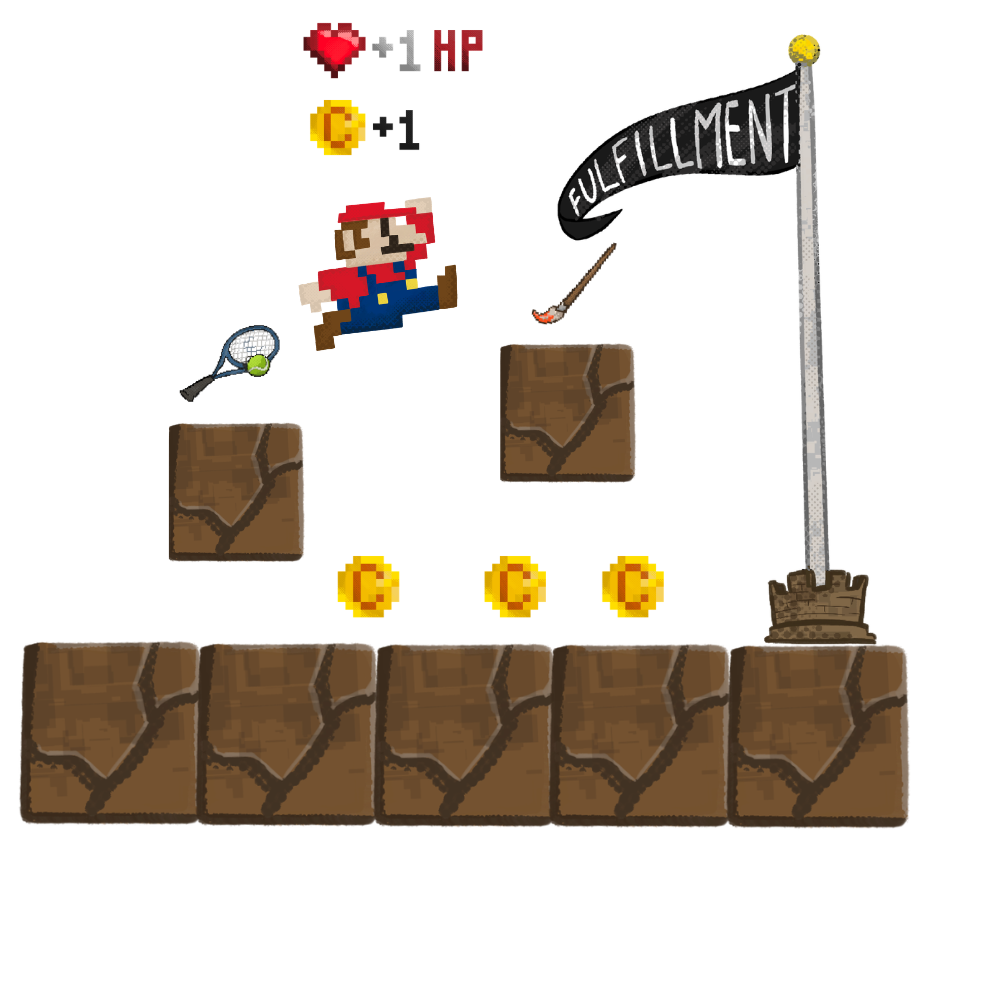
Humor isn’t inherently harmful — memes constitute a coping mechanism for many. In fact, according to a 2023 study conducted by the National Library of Medicine, there is a negative correlation between humor and perceived stress. However, humor can become maladaptive. Besides humor — specifically, consumption of memes — people should practice healthy coping mechanisms such as exercise, mindfulness, self-care and socialization. These options lack the downsides of memeification, and they promote both physical and mental health.
Memeification isn’t a one-dimensional issue. It causes desensitization to politics, war and perspectives on controversial issues; it decreases users’ empathy; it lends a platform to racist and anti-semitic content; and it creates the illusion of political engagement without requiring meaningful action. However, creating and engaging with memes also constitute a coping mechanism for many. Users must establish the distinction between good-natured humor and discriminatory jokes, upholding respect and decency to serve the online communities that they cherish.