April is infamous for beginning with an iconic and silly day of pranks: April Fools’. The day of mirth and mischief originated in 1561 when the French calendar changed to begin in January rather than April 1. Originally meant to ‘fool’ those unaware of the change, the day is now synonymous with a pranking culture rooted in psychology.
Psychology teacher Ariane Tuomy explained how group expectations increase pranking, and how the culture incentivizes people to participate in the tradition, as it is the one day a year where pranking is especially normalized in society.
“(Pranking on April Fools’) is a combination of people feeling a certain obligation to participate in the tradition and a permission to prank others,” she said.
The reasoning behind why people prank others is not limited to one: The most prevalent reasons are lighthearted humor and breaking societal expectations.
“Our brains find it humorous when we have an expectation for something and then it’s something else which happens,” Tuomy said. “The humorous component of April Fool’s days is rooted in testing the social boundaries.”
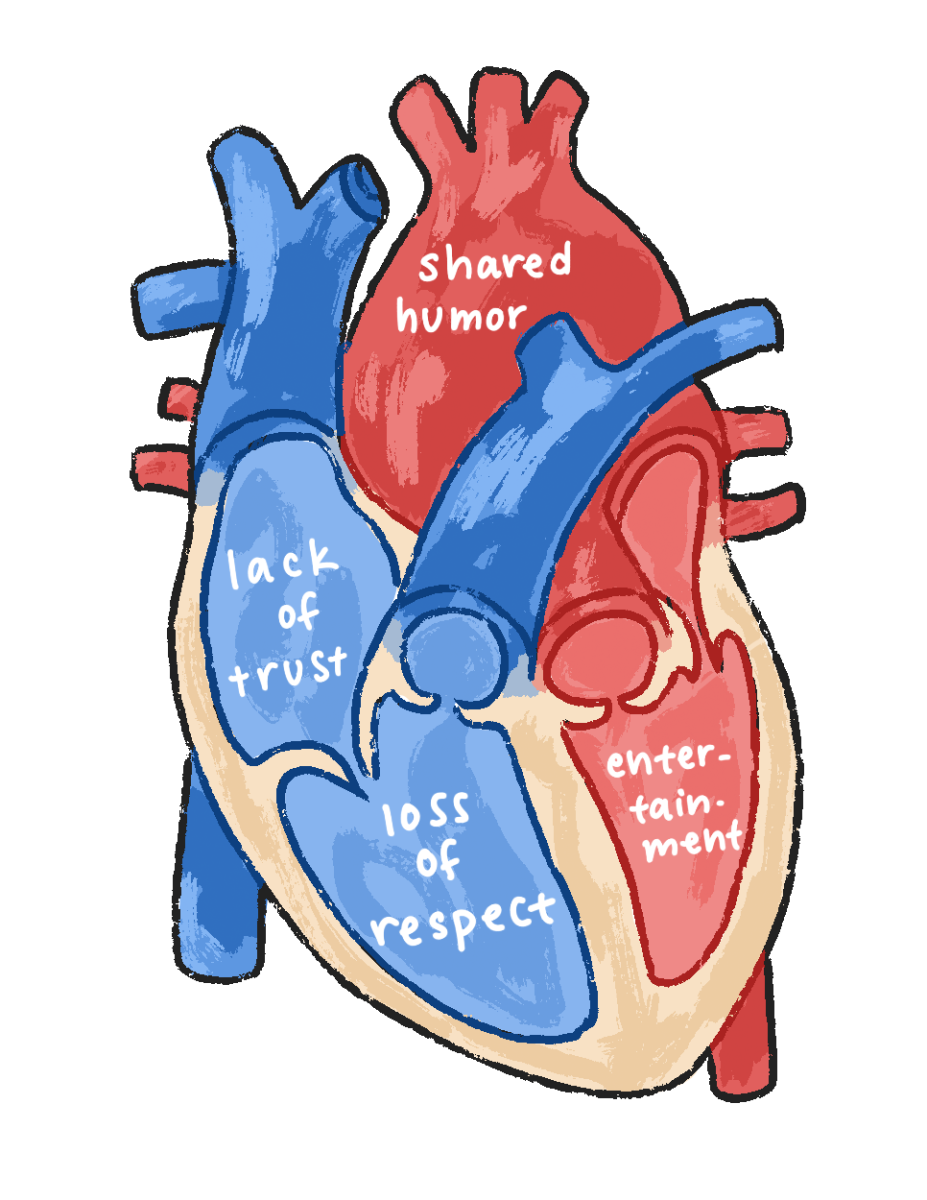
Despite pranking holding a lighthearted connotation, when pranks are posted on social media, what starts as a fun, intimate moment meant to be a testament of friendship can become a practice of humiliation or misinformation. This practice pushes the boundaries of what is socially acceptable and leads to decreased trust within society.
Pranks primarily spread misinformation due to society’s tendency to accept information already aligning with their beliefs. On April Fools’, pranks can exploit those cognitive confirmation biases, leading to the spread of misinformation and to decreased trust of social media content.
Although many pranks are a testament of one’s friendship, for Psychology Club co-president sophomore Emilie Matthey, when pranks are done with the intention to hurt, it can decrease trust in relationships.
“If it is a playful prank, then I think it can actually cause some validation and bonds (between) the pranker and the person being pranked,” she said. “But if the prank is taken too far, the person can end up feeling either betrayed, hurt or even traumatized.”
If a relationship is truly strong, it can be seen as more socially acceptable t o prank a close friend. However, if the friendship is weaker, a simple joke can be taken with offense.
“If I was telling you I know you well enough to mess with you in a way where I know that our relationship is strong enough to withstand that, it is a testament of our friendship,” Matthey said. “By putting someone in a ‘vulnerable’ position, it’s a signal of a strong, resilient bond, where they trust you enough not to take it seriously or personally.”
Sometimes, even in close relationships, pranks can have unintended consequences. Everyone has different backgrounds, experiences and personal values, so things can be interpreted differently and have different effects on different people. Some topics can be more sensitive than others in a discussion, especially if those around have previous negative experiences around the topic. This is why it is so important to establish boundaries in relationships before pranking.
For junior Van Calvert, it comes back to the intention of which the prank was done. “I don’t think it’s negative, unless people make it so,” he said. “As long as the prank is being done in good fun and spirit, I would consider pranking to be positive.”
At the end of the day, April Fools is a celebration of the art of pranking and invites society to partake in jokes and entertainment with friends. Although pranks are considered a testament of one’s friendship, if they are not committed with positive intention, they can lead to victims of the prank feeling betrayed and experiencing a decrease of trust in friendships.
“It depends on whether somebody is being laughed at, or laughing with the other,” Tuomy said.