On Halloween night, ghosts and goblins come out to play — but in the days before, it’s people’s credit cards that haunt them as they pay for their single-use costumes.
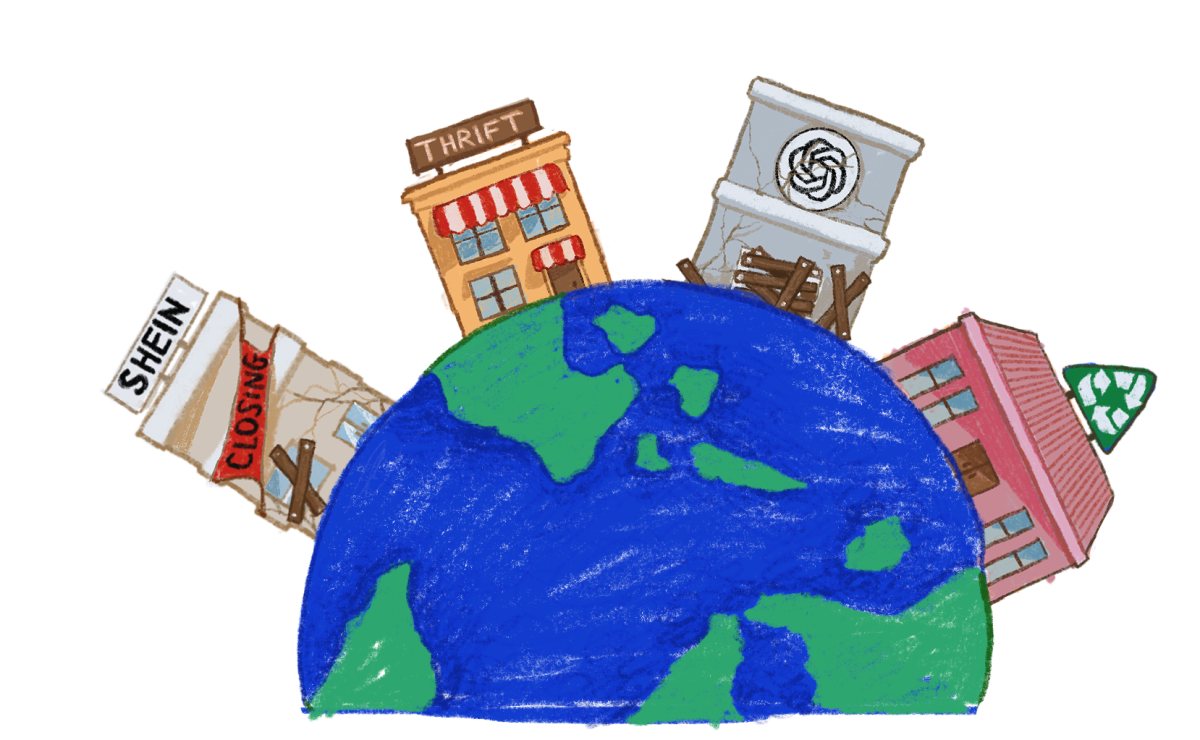
According to the Yale Sustainability website, almost 85% of Halloween costumes end up in the landfill and about 83% prepackaged costumes are made of oil-based plastic materials, which do not decompose easily due to their chemical structure.Style Swap Club social media manager junior Nyla Wang encourages students to consider the environmental harms when costume shopping.
“I think it’s really important to be sustainable when creating Halloween costumes, because most (Halloween costumes come) from stores and are made with cheap materials (such as) polyester and nylon,” she said. “(These materials) take hundreds of years to break down, and they’re only worn once, so (they) just end up making a lot of waste in the environment.”
The high demand and mass production of costumes can contribute to exploitative labor practices when factories require laborers to work 16 hours a day to reach production quotes. Many of these factories take advantage of child labor and adhere to the exploitative laws in place. According to research from George Washington University Law School, around 75 million factory workers are employed globally, with roughly 2% living with wages above the poverty line. This cycle contributes to generational entrapment, as child labor is often used for these low-skill tasks. Children are exploited for profit while earning little to nothing in return. Companies take advantage of locations such as China and India, which produce a lot of worldwide goods and pay workers just one-fifth of what is required to afford
basic necessities. The popularity of single-use costumes helps encourage further unsustainable production and exploitation.
For sophomore Nia Sharma, textile waste isn’t in her plans this Halloween. She emphasizes the importance of recycling old costumes and reusing what she already owns to create her look this year.
“This year I’m being a bunny for Halloween, and I got my stuff off of Depop because I wanted to avoid ordering from fast fashion sites,” she said. “I’m also going to Gunn’s Halloween costume swap (on Oct. 29) to see if there are any extra pieces I can add to my costume.”
Green Commissioner senior Doyoon Kim works to help Gunn’s community minimize waste through initiatives like the Hoco Spirit Swap where students are able to bring in old spirit gear to receive new items. Some accessories and clothing items can be recycled into costumes, sustaining a cycle of reuse.
“I think in the process of advertising the (costume) contest, we could also mention, sustainable options, (an example being) make your own costumes out of what you have, like cardboard and your own clothing,” she said.
Along with the Student Executive Council and the Green Team, clubs within Gunn such as the Style Swap Club has been working to mitigate environmental impacts at a community level through creative, sustainable initiatives. Recently, they organized a last-minute Halloween Costume Swap, where students traded in old costume pieces or sets to receive new ones free of cost. The club also encourages students to consider more sustainable options for future events, such as purchasing costumes secondhand from thrift stores.
—Written by Lena Duggan