While national politics can often feel distant, Palo Alto has felt the implications of new federal policies in tangible ways. From Stanford University’s research cuts to strategies enforcing deportation efforts around Silicon Valley, the Trump administration has triggered and heightened challenges for the local community over the past year.
City Council Member Greer Stone is a life-long Palo Alto resident — a PAUSD graduate and former teacher who is now a teacher in a nearby district. As an active community member, he raised concerns about how shifts in the federal policies have significantly changed the nation.
“It’s not the America that we’ve come to know in our own lifetimes,” he said. “It’s not even reminiscent of an America that I can recall looking back on in the history books. We’ve had our moments in American history where we wish we could go back and change, but this (is) sort of slides towards a more authoritarian style government where there is retribution for political foes.”
According to Stone, the change in the federal government’s overall direction is evident through categorical grants, which are federal funds given to state or local governments in exchange for conditions or requirements being met. Palo Alto relies on these grants for tens of millions of dollars. Recently, new conditions, or wording of conditions, have arisen that may conflict with the city’s ethics, according to Stone. While these changes have not been significant enough to cause the city to reject aid yet, Stone thinks that if the city faces conditions that they are morally against, there is potential for significant budget cuts.
For example, the Trump administration has recently incorporated removing affirmative action and DEI in hiring practices into these grant conditions. Since California law under Proposition 209 already prohibits this practice, Stone says that as a city, this condition hasn’t currently affected the city’s grants. However, he views it as a way to devalue diversity in hiring and staffing and the start of a worrying trend.
“It’s going to be challenging (having these) discussions about foregoing money in order to stand up for what we believe in,” he said. “But hopefully, that’s a decision that we will not have to make.”
Public perception of the economy overall has seen a dip. Just over half of the U.S. adults as of September 2025 say Trump’s policies have made economic conditions worse, with 19% of Republicans having this sentiment, according to Pew Research Center.
According to Stone, many signs currently indicate a major economic downturn — including decreased consumer sentiment, drop in sales tax, rising inflation and a weakening tech job market with the emergence of AI. He mentions that the county is expecting a deficit between now and 2030, raising the possibility of going into a recession. Additionally, during the November election, the county passed Measure A, which increased sales tax in order to raise additional revenue to account for this predicted deficit.
“It’s going to help slow the bleeding a little bit, but it’s not going to completely close the funding gap that the One Big Beautiful Bill caused (which) will have a ripple effect across the county,” he said. “The county is going to experience deficits, (which) cities are going to feel the impacts of.”
The One Big Beautiful Bill, issued in July 2025 to reallocate funding, has cut trillions of funding from Medicaid nationwide, and California’s Medicaid, known as Medi-Cal, will have billions of funding cuts, according to UC Berkeley’s School of Public Health. It is estimated that economic output will decrease by about $37 billion, raising concerns for the industry.
Recently, Bay Area Pediatrician and Immediate Past President of the California Medical Association Dr. Shannon Udovic-Constant has been hearing talk about closing clinics and health centers due to the heavy budget cuts. Last month, Udovic-Constant heard that Santa Barbara County was planning to stop services to federally qualified health centers. She is nervous about how it will impact hospitals across the state.
“They decided to put that on hold for now, but those are the kind of conversations that are happening,” she said. There’s several hospitals across the state that already are managing on very tight margins, and if they lose this income, we’re very concerned that some hospitals will close.”
Udovic-Constant has a multi-faceted view on this matter, including concerns about costs and the community.
“As you take away the insurance, that (economic or mental burden of disease) is still going to be there, and without that ‘medical home,’ people will delay seeking help, and we will identify disease and illness at later stages,” she said. “One of the things that the healthcare community, specifically physician advocates, is planning is to make sure that we’re educating our communities about the impact that votes from their members of Congress can (have on) their access to health care.”
The One Big Beautiful Bill, signed by President Donald Trump in July has led to budget cuts for the county, and according to Stone, the county relies on much of this budget to be able to provide essential services such as mental health programs, various county hospitals and services for the unhoused. Due to this, there have been conversations proposing to cut or eliminate some of these services, such as allcove, a county funded teen mental health service that has partnered with the district in addressing youth well-being and teen suicides. Stone emphasizes that many of these services combat some of the city’s major issues, and cutting them could have detrimental impacts on the community.
“If we lose something like that (allcove), is the city capable of stepping up and offering similar services?” he said. “We’re all connected in this kind of greater ecosystem, so there’s a lot of concern, a lot of fear, (and) a lot of just uncertainty moving forward. All (of) that is compounded by an administration that kind of just governs at a whim.”
The One Big Beautiful Bill also set out to cut $140 million from Stanford University’s funding, according to the Stanford Daily. This resulted in layoffs for the university, and federal funding grants were cancelled. The university’s staff was officially notified in January 2025, when the information started to circulate on the campus.
One of Stanford’s finance managers Nicole Wang has already noticed a significant shift in the research projects. However, there is still hope for sustaining these projects.
“Some projects may need to be adjusted to fit within a tighter budget,” she said. “Even so, many research efforts are continuing, and the university is actively exploring additional funding sources to help keep important projects moving forward.”
Along with these research projects, the staff and students are experiencing the impacts.
“Students may see fewer paid research positions or fewer available spots in some labs, although we’re working hard to keep students involved wherever possible,” Wang said. “Many (faculty members) have adjusted the size of their research teams or scaled their activities to fit within the tighter budget.”
While these funding cuts are nerve-wracking for Stanford, Wang has already seen people working together to fight back, and urges the community to do the same.
“Stay informed about the importance of research and support students and faculty during this period of adjustment,” she said. “Locally, people can support student research programs, attend campus events or contribute to initiatives that help maintain educational and research opportunities.”
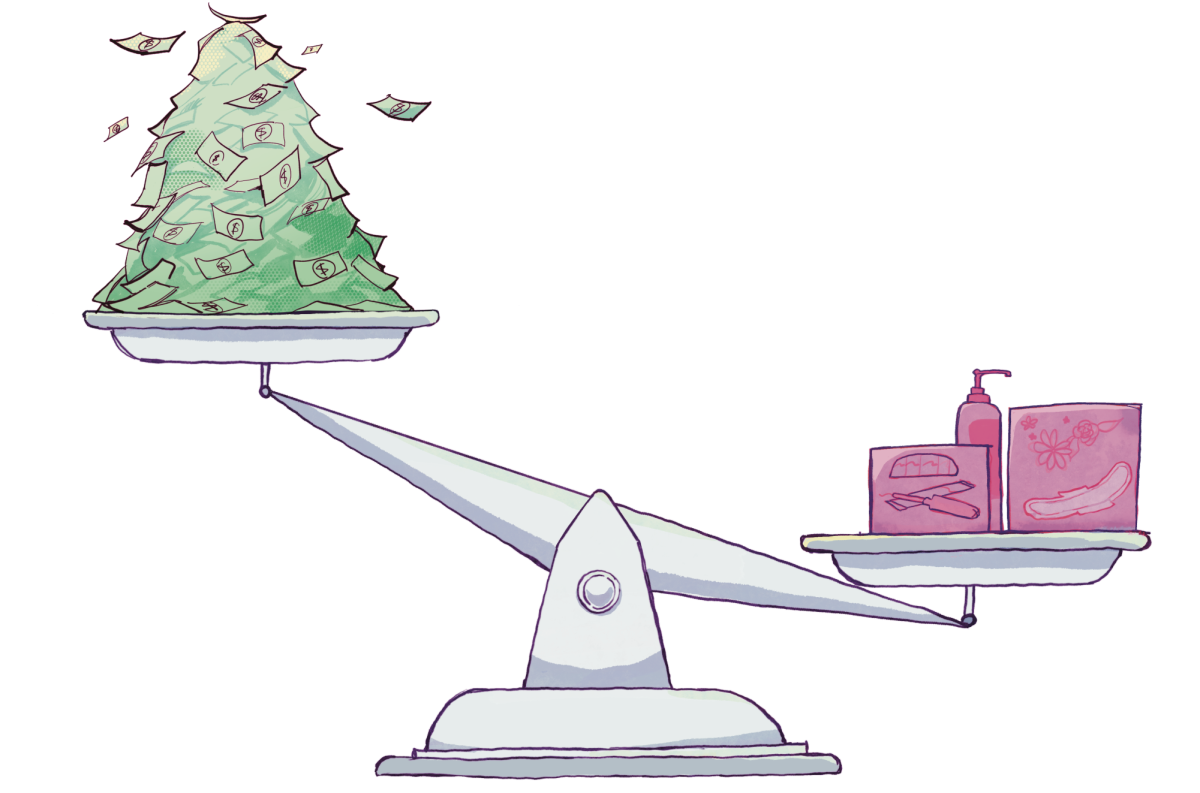
As these areas, including social services and academic research, see their budgets reduced, the funds have instead been reallocated toward bolstering U.S. Immigration and Customs Enforcement under the One Big Beautiful Bill. Since January, the nation has been swept by ICE, deployed to find illegal immigrants, raids and threats: instigating fear and violence among immigrant communities across the country.
The new Deputy White House Chief of Staff Stephen Miller and Department of Homeland Security Secretary Kristi Noem, both appointed by Trump, made a directive in a meeting in May 2025 to arrest 3,000 immigrants a day — four times the previous daily average. Since taking office in January 2025, more than 100,000 illegal migrants have been deported under the Trump Administration, according to The White House.
On January 20, 2025 the administration rescinded an enforcement action that stopped law enforcement from acting around and within “sensitive areas,” including schools and places of worship. This reversal gives ICE the ability to enter these facilities priorly deemed safe for community members. A DHS spokesperson reported on the change in policy.
“This action empowers the brave men and women in CBP and ICE to enforce our immigration laws and catch criminal aliens — including murders and rapists — who have illegally come into our country,” they said in a press release. “Criminals will no longer be able to hide in America’s schools and churches to avoid arrest. The Trump Administration will not tie the hands of our brave law enforcement, and instead trusts them to use common sense.”
As of November 2025, however, of the people detained and deported, 73% had no conviction, while only 5% had a violent conviction — with the other convictions including traffic, immigration, vice and property. While detainees arrested by ICE who have no criminal charges or criminal convictions rose from 1,000 to 21,000 from January, the share of people in ICE detention who were arrested with criminal convictions has decreased by half since January, according to Cato Institute, a libertarian research organization using Immigration and Customs Enforcement’s, “Detention Management.”
Stone mentioned the concern that immigrants in Palo Alto may accumulate fear towards all types of government, including the city and county. He says this lack of trust in law enforcement, prompted by Trump’s harsh agenda, can be dangerous. The city must therefore work to increase and maintain trust and recognition that they have all community members, including immigrants’, best interest at heart. One way Stone proposes is having an accessible town hall to immigrant communities, such as at one of the trailer parks.
Student and Family Engagement Specialist Jose Ordonez said that since the administration has displayed its intentions regarding immigration, the school has received concerns from Gunn families about student safety. Fear is one of the biggest negative outcomes of this, according to Ordonez, and student attendance and engagement has also been impacted. Additionally, he said that families have had to draw back on certain jobs that could be dangerous due to traveling. These changes have heightened the need for Gunn and the city to emphasize it remains a safe space for all students and community members.
“The main concern (for me) is making sure the kids feel safe (and) that they’re able to get the support they need (regarding issues such as) mental health,” he said.
Along with city officials and school staff, Ordonez emphasized that law enforcement in the area, including the Palo Alto Police Department, are resources that any community members can and should have trust in.
“The community is trying to keep them here and be able to support them (for) whatever they need to be successful, not only for themselves, but for their kids as well,” he said.
Ordonez actively works to ensure families within the PAUSD district are informed about what is going on around the area, have the resources they need, and feel they are supported by their community and leaders. Using Santa Clara County Rapid Response Network, along with other forms of more direct communication, Ordonez and others proactively release information to vulnerable members across all of Santa Clara County in hopes of protecting their safety and limiting fear. One way Ordonez especially aids in this process is by being the communicator from English to Spanish, as many news updates and information meetings within the city and school take place in English — sparking a challenge for non-English speaking community members.
“(These resources) are for them to not only just reach out, but be able to ask questions,” he said. “It’s been ongoing (since before the administration) but now we use it to send information and resources (regarding immigration and deportation updates).”
The County Rapid Response Network has a 24/7 hotline that provides emergency legal support and observation. Along with this, they provide real-time updates about ICE and important news or information in the area and offer Hotline Cards and Posters that have instructions for dealing with ICE officers and other law enforcement, providing legal support and more. Ordonez emphasizes that ensuring steady communication and maintaining community support is essential to aiding struggling members of our community through this difficult time.
Stone has noticed a shift in sentiment, in both Democrats and Republicans, towards Trump since his reelection. He mentions that while Democrats have been opposing these policies prior, it has grown. In addition to that, he’s noticed Republicans, both major politicians and communities more locally, reduce their support for Trump’s administration as well.
“That’s giving me hope that maybe finally as a country we are getting close to being able to stand up in a more unified fashion and say this is not who we are, and we’ve got to get back to sensible governing,” he said.
Stone has seen a significant decrease in MAGA hats and signs within the Bay Area, to little-to-no Trump flags in view on Highway 5, something he attributes to a decrease in support since Trump took office.
“We’ve had times where we have fallen back a little bit, but ultimately we have moved towards progress,” he said. “I do believe this is momentary. We will look back with great shame as a country, but we will ultimately get past it, and I’m hoping that we’re starting to see the beginning of that now.”
The city has been displaying their opposition as well: joining in to various lawsuits against the Trump administration, specifically pushing back against certain federal overreach including unlawful immigration enforcement.
“We’re trying to find ways in which we can fight back that is going to kind of leverage the power we (cities) have and ultimately be the most beneficial to our residents”
Stone urges the community, primarily the youth, to continue to push leaders to stay within their power range. He already highlights community action such as the numerous No Kings protests that have taken place across the city, where community members have expressed their concern for federal overreach. He also emphasizes that younger people should use this time to reflect on the problems and build a better future.
“We’re seeing the cracks in (our systems) for maybe the first time in our lifetimes, and so we can’t take elections for granted, and we got to fight like hell every day to be able to make sure that we are preserving the good in this country (which) I believe we will,” he said.