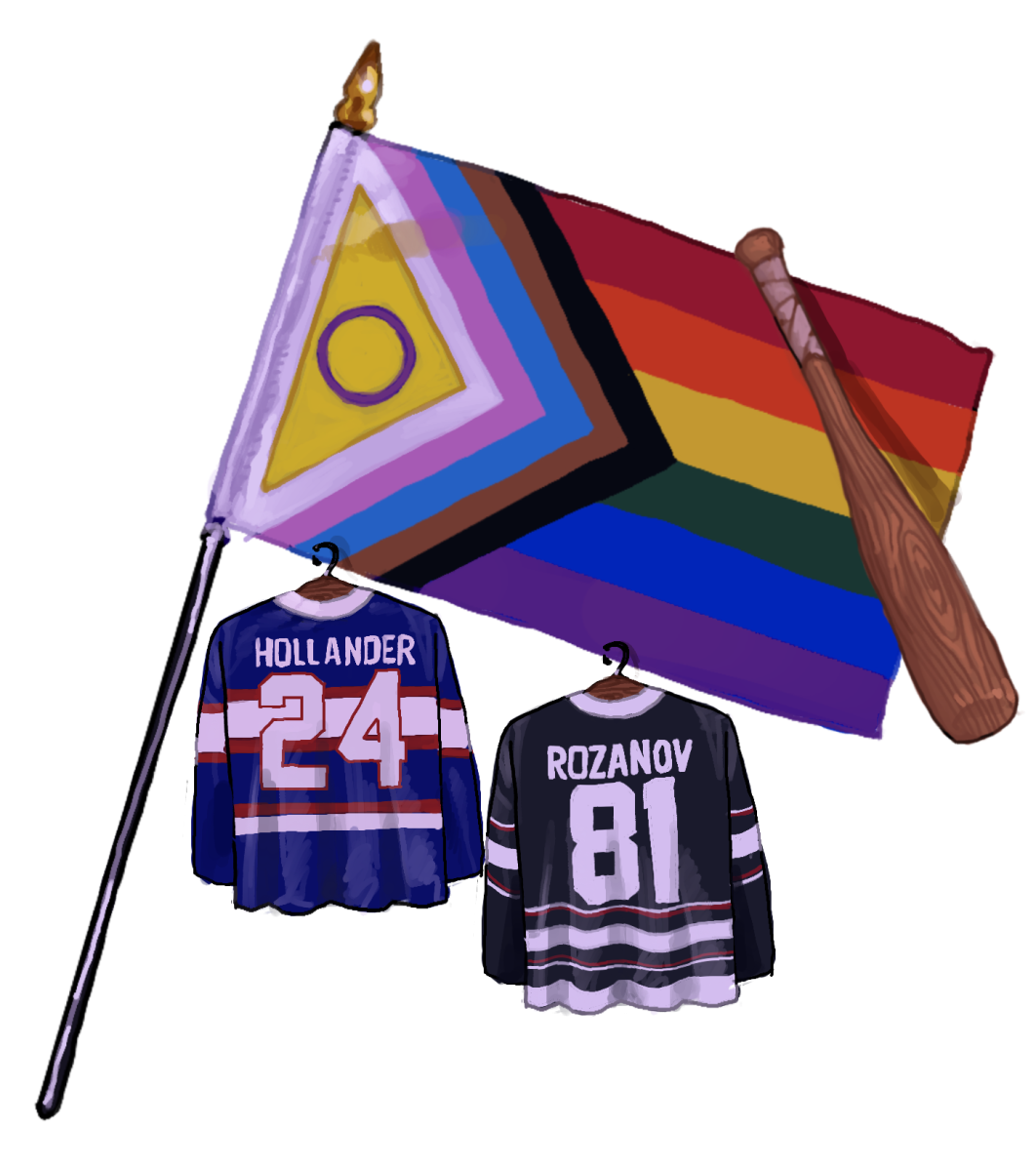
The Milan crowd roared after queer U.S. figure skater Amber Glenn’s flawless free skate launched her from thirteenth to fifth place at the 2026 Winter Olympics in Italy. Some spectators also raised a particularly brightly-colored fabric: the all-inclusive LGBTQ+ flag. Throughout competitions, many athletes promoted awareness for the LGBTQ+ community with their platform.
A record number of LGBTQ+ athletes participated in this year’s Winter Olympics, with at least eight openly queer athletes competing on Team USA across figure skating, hockey and more. Notably, Glenn — the first queer female skater to win Olympic gold — frequently advocates for LGBTQ+ representation in sports. In interviews, Glenn often discusses how her struggle with her identity impacted her mental health and for change to make sports communities more inclusive.
As more athletes come out, representation in sports media has also increased significantly. Recent popular media like TV show “Heated Rivalry,” released in 2025, spotlighted the struggles that queer athletes face in team sports. Lead actors Hudson Williams and Connor Storrie were torch bearers for the Olympic Torch in Milan, and fans credit the show for opening up conversations about queer athletes in hockey, a sport in which LGBTQ+ athletes often face discrimination.
At Gunn, the Hidden Opponent Club is dedicated to athlete well-being. Club secretary and varsity track and field hurdler junior Trevor Reyes believes that the shift in attitude towards queer athletes has been increasingly positive in recent years as more professional athletes come out.
“The attitude (towards LGBTQ+ athletes) has definitely changed as countries evolve,” he said. “People are becoming more open about it, and people are speaking up more. I think (as athletes, we) are breaking down stereotypes, (which) encourages more people to be more comfortable with themselves in certain sports.”
Gender Sexuality Alliance Club Co-President and varsity softball player senior Claudia Wolff de Tourreil adds that the Gunn athlete experience for LGBTQ+ athletes has improved over the years.
“In my three years at Gunn, (attitudes towards queer athletes) have become a little more positive in the teams I play on,” she said. “I think that the connection and community within a team is a big factor in how inclusive it is to (LGBTQ+ athletes), so it depends from year to year on a team and how that culture is going to feel, but it has (generally) gotten more inclusive.”
For varsity soccer player freshman Jeremiah Magallon Obeso, there is a lack of guidance for athletes playing at the high school level as a transgender athlete.
“In my experience here (at Gunn), I haven’t really gotten any advice from sports coaches (as a transgender athlete) to choose which team I’m willing to play on,” he said. “My parents usually tell me to just choose the one I want (to play on), but I don’t think there’s a lot of support from the school itself.”
While there are no official policies prohibiting athletes from participating in sports based on their sexual orientations, athletes still face general prejudice from fans or other athletes within their sport or team.
“Teams are supposed to be very supportive of one another and work together, but being out as an LGBTQ+ person in a team can feel very isolating knowing that you’re ‘different’ from everyone else no matter what you do,” Reyes said.
In a press visit to the Milan Olympic village on Feb. 7, the International Olympic Committee announced a policy expected to place stricter restrictions on transgender women if they have received gender-affirming treatment or surgery, a move that many feel seems to follow Trump’s policies. This would be the IOC’s first universal policy on transgender athletes which would affect all sports included in the Olympics.
For Magallon Obeso, the IOC’s announcement did not come as a shock but was frustrating nonetheless.
“The gender someone was born as shouldn’t be used by others to limit how someone can perform to their highest level,” he said. “I think (transgender women) should be allowed to compete because if everyone is working their hardest, then anyone can be anyone without gender restrictions.”
As federal and committee-level policies increase limitations, smaller sports communities offer valuable advice to support LGBTQ+ athletes locally. According to Wolff de Tourreil, coaches and fellow athletes need to work together in order to build a more inclusive community so that LGBTQ+ athletes can fully enjoy the benefits of sports.
“Just because someone has a different experience than you doesn’t mean that their experience is any less valid,” she said. “It’s important to be inclusive on those teams since you do spend so much time together and have to work closely together.”