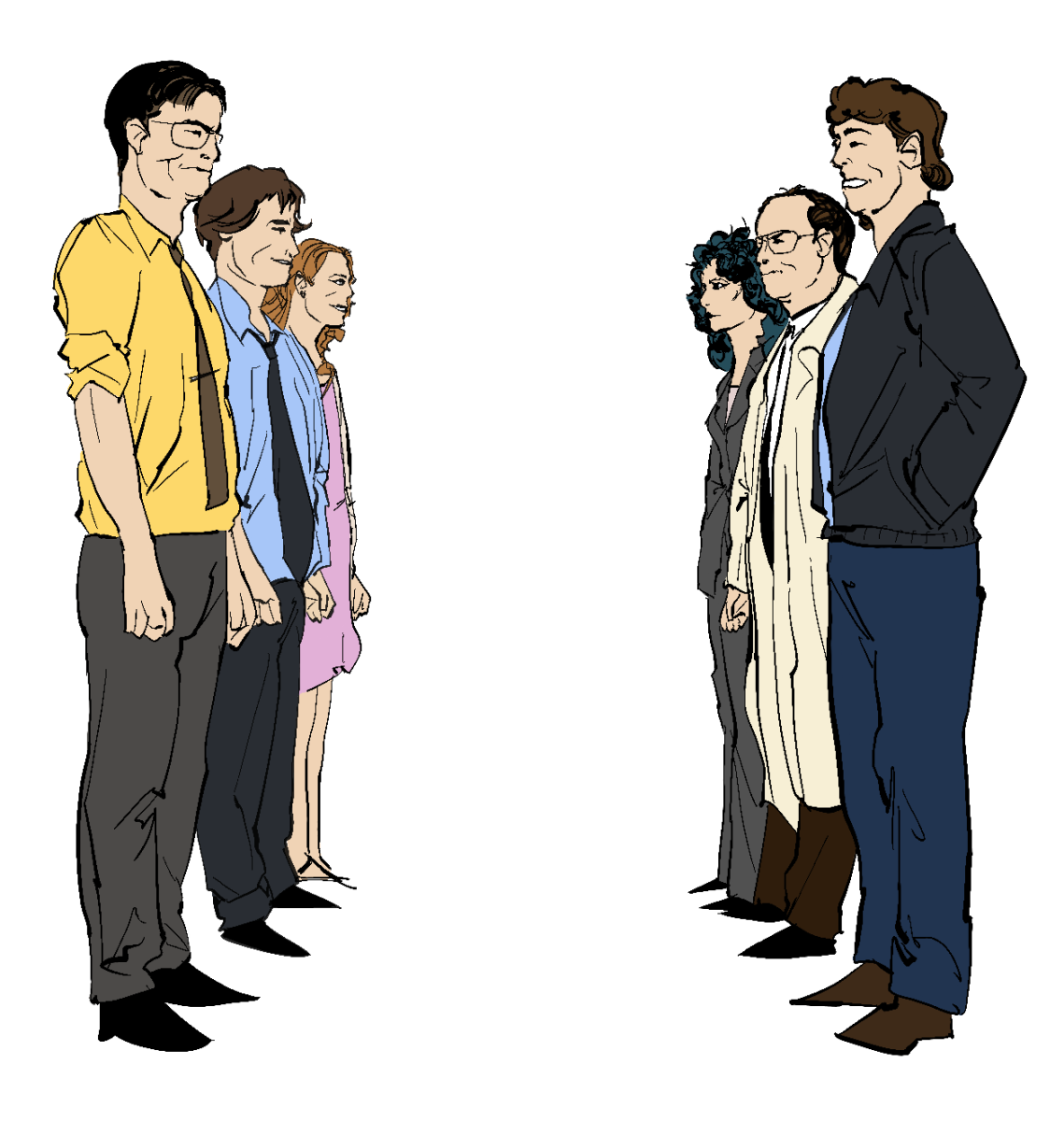
Most are familiar with the two classic comedy shows, “The Office” and “Seinfeld.” Perhaps you binged “The Office,” with its homey vlog-style look at the crazy antics of the workers at the Dunder Mifflin Paper Company, or the bustling, quirky “Seinfeld,” where every day is a day to eat lunch at Tom’s Restaurant and getting to know your next-door neighbor is a rite of passage. No matter which comedy you switch on when you grab the remote, both shows have a distinctive writing style that makes their loyal viewers beg for more episodes. But this poses the question: Which show is funnier?
To accurately compare the two, I selected some of the highest-rated episodes of each series on IMDb. For “The Office,” I watched “Stress Relief Part 1,” rating 9.7/10. The show opens in a panic when Dwight, the rule follower, simulates a fire in the office to see if his coworkers effectively follow fire safety protocol. Unsurprisingly, no one does the safe thing and Michael, the boss, tries to find strategies that relieve stress after the chaotic occurrence.
What truly made this episode stand out to me is the disarray of the fire alarm intro, which many people consider the best opening of all television. Many comedians call this a “subversion of expectations,” where an event is expected to happen but a completely different outcome occurs. Additionally, the smaller plotlines were crafted with extreme care. For example, when Angela tries to save her cat from the “fire,” she throws a $12,000 realistic prop into an open ceiling tile. When Jim, Pam and Andy watch a fake pirated movie, it features actors Jack Black and Cloris Leachman in an unexpected cameo.
In “The Opposite,” in which Jerry’s close friend George feels unlucky, so he decides to approach everything the opposite way he normally would. Jerry notices that while George is the luckiest he’s ever been and his other friend Elaine is curiously the opposite, everything evens out for him. This joke is brought up several times throughout the episode, such as when he loses a $20 bill and finds another one minutes later in his pocket, and when he surprisingly breaks even in his poker games.
The best part about “The Opposite,” rating 9.5/10, is the repetition of jokes that are brought from the opening to the end. “Seinfeld” uses a tactic known as the “Rule of Three,” where two ordinary things are mentioned in a list and the third is an unusual item that serves as the punchline. In this particular episode, George and Elaine are two ordinary people having good and bad days, whereas the outcome of Jerry’s day remains completely neutral. In contrast to sitcoms like “Friends” and older shows such as “Three’s Company” and “Happy Days,” “Seinfeld” creates laugh tracks from live audiences. This results in more genuine reactions, without actors having to pause awkwardly for the canned laughter to subside. However, due to “Seinfeld” being a sitcom that started airing over 37 years ago, some jokes concerning gender and race may not land as well in today’s world.
While both shows have their strong points, “The Office” is the one that I truly hold closest to my heart. While “The Opposite” is based on everyday events being entertaining, “Stress Relief” surpasses expectations. It isn’t just funny because of the chaos, but also because the audience has been acquainted with the cast of characters for several seasons, making their frenzy even more witty. I think the key to creating timeless TV shows is making a conscious effort to interweave techniques that are sure to make people laugh, while also remaining consistently funny, regardless of how many years have passed.