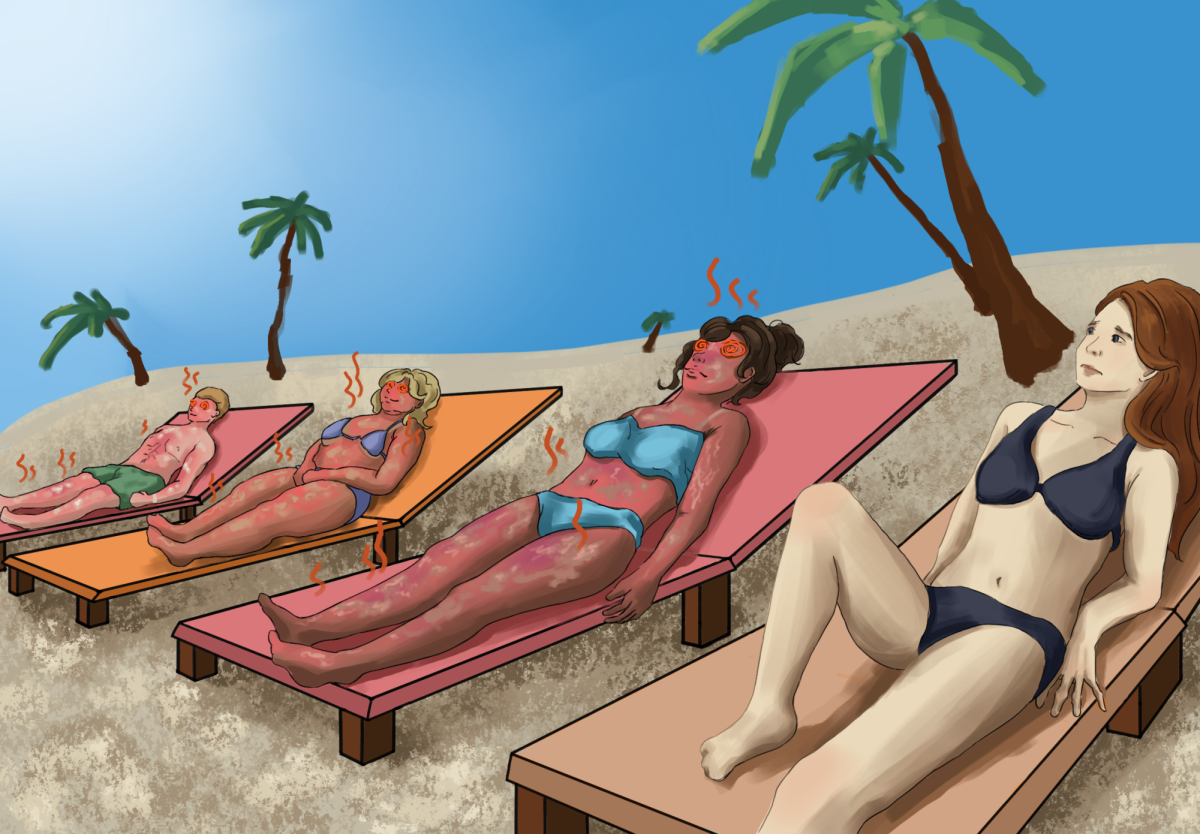
The minute that students arrive on campus for the first day of school, they’re greeted with the unofficial measures of summer success: a classic farmer’s tan, an unmistakable sock line and streaks from swimwear. Though seemingly harmless, this focus on bronzed, tan skin reflects a broader culture that encourages risky and unhealthy practices in pursuit of an aesthetic standard.
This obsession over tan lines can contribute to teens developing an addictive relationship with them. A 2017 study conducted at Georgetown University found that 20% of women showed signs of a tanning dependency, believing it improved their appearance and mood. Yet, once the feeling faded, the tanning bed users showed symptoms of depression. These sudden shifts in emotion can enable teens to become obsessive with a potentially tanned version of themselves. When cultural and social pressures, such as social media trends and peer comparisons, idolize this idea of “perfect” tan lines, it can reinforce these emotional highs and lows.
Such an emphasis on the perception of tanning being beauty can contribute to people having variants of seasonal self-esteem. A prime example of this trend is when teens post photos showing their skin, often lighter or paler, in winter. Contrasted by subsequent summer photos focusing on their tanner skin with captions like “Summer, Tan Happy.” With these labels and posts, teens link pale skin with lethargy and tanned skin with energy. Over time, these repeated associations solidify and impose unrealistic standards of comparison for year-round bronze skin, often achieved with tanning sprays or tanning beds. Failure to get a good tan, especially in the winter, can contribute to the manifestation of seasonal depression in teenagers.
One of the most concerning physical effects of tanning is an increased risk of skin cancer. According to a study performed in 2022 by Clio Dessinioti and others, tanning exposure in a tanning bed or the sun for extended amounts of time can raise a person’s chances of developing melanoma, the main type of skin cancer. According to the Worldwide Cancer Association, over 80% of skin cancers are caused by overexposure to ultraviolet radiation. This is not only a risk with outdoor tanning, but also with indoor tanning, which injects ultraviolet rays directly into skin cells. Although people are aware of the effects of being tan, the attractive payoff of tanning can instill a willingness to consciously or unconsciously ignore the documented risks. The external health effects are translated internally, too: After spending too much time in the sun, the body tries to rid itself of damaged skin cells, which can look like peeling skin. Severe second-degree sunburns from excessive tanning can even damage nerve endings.
A common misconception is that tanning instead “helps” teens as it provides more vitamin D exposure. However, the type of ultraviolet ray that produces vitamin D actually gives less sun protection compared to other types of rays and is different from the type that stimulates melanin production.
Without stronger awareness initiatives to debunk myths and promote safer routines to tanning, it’s easy to see why teens might engage in risky practices, even when aware of the surface-level health risks. Of course, progressive strides have been made over the years to protect youth. In 2015, the Food and Drug Administration proposed a rule that would prohibit minors from using beds and booths, but it is not enough to ban only certain age groups as tanning is harmful to all. Students need to actively question the pressures and associations that give tanning its appeal. Only then can awareness initiatives gain traction, the risks of tanning be taken seriously and the community reframe tanning culture.